The Common Man Speaks

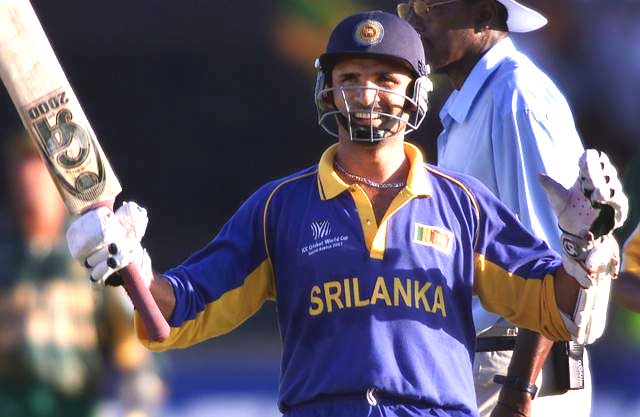
After just 1 run in first 6 innings, Marvan Atapattu made a historic comeback

September 29, 2019 by Keyur Seta 4 Comments

Former Sri Lankan cricketer Marvan Atapattu is one of the best batsmen to have played for the island nation in Asia. He played 90 test matches and scored 5502 runs with 16 hundreds and 17 fifties and a highest score of 249. He had a good batting average of 39.02.

But the start of Atapattu’s test career was nightmarish to say the least. He made his debut in Sri Lanka’s only test against India as a 20-year-old youngster. SL lost the match by an innings and 8 runs. Worse, Atapattu scored 0 in both innings.

The selectors dropped him from the team. He returned to first-class cricket and after almost two years, he was selected again for Sri Lanka. However, it was almost the same story. He scored 0 in the first innings and just 1 in the second.

Atapattu once again returned to domestic cricket and scored plenty of runs. This was enough to impress the selectors again. So, he was back in the team. And, would you believe, he scored 0 in both innings again!

Marvan Atapattu
Marvan Atapattu

At that time, his career stats were 1 run and 5 ducks in his first 6 innings with a batting average of just 0.16! For any top-order batsman even an average of 16 is considered horrible as it suits more to number 9 or 10 batsman. And here was a professional batsman with such an average.

It is believed that the single run that Atapattu scored in the first 6 innings was wrongly attributed to him by the umpire since it should have been a leg-bye.

One could only imagine what would have been going through Atapattu’s mind then. He would have asked himself again and again as to why he goes so disastrously wrong at the international level after being so consistent at the domestic level.

However, the selectors seem to have a lot of faith in him as he was again selected in the Sri Lankan team two years later in 1997 against New Zealand in Dunedin. His scores in both innings were 25 and 22. These numbers might not sound much but going by Atapattu’s horrendous run before this match, he would have been relieved.

But his biggest relief came in the same year in November when he scored his first century in test cricket. It was against India in Mohali where he scored 108 with 14 fours as an opener. From here on, there was no looking back for Atapattu.

Along with tests, he also went onto become a prolific ODI player for Sri Lanka. In 268 matches he scored 8529 runs at an average of 37.57 with 11 hundreds and 59 fifties.

But Atapattu also holds a unique record which is worth knowing. He scored 6 test double hundreds. In the list of most double hundreds, he is just third in the list after the legend Sir Don Bradman (12 double hundreds) and Wally Hammond and Brian Lara (7 each).

Also read: Who are Duckworth and Lewis and why ICC adopted their method?

From a career average of just 0.16 to getting included in a world record list featuring the great Bradman, Atapattu’s journey has been extraordinary to say the least.

He is a shining inspiration for many of us who start doubting ourselves [be it from any field] after few failures and rejections. If you ever feel bogged down again, just ask yourself if your situation is as worse as scoring just 1 run in 6 test innings?

By: Keyur Seta

Additional reading:

Only time Tendulkar was NOT selected in team India, neither injured nor rested

When hearing issues stopped India from winning against England

Filed Under: Cricket Tagged With: Marvan Atapattu career, Marvan Atapattu five ducks, Marvan Atapattu life story

Saaho’s major similarity with Baahubali (SPOILERS alert)

September 1, 2019 by Keyur Seta 2 Comments

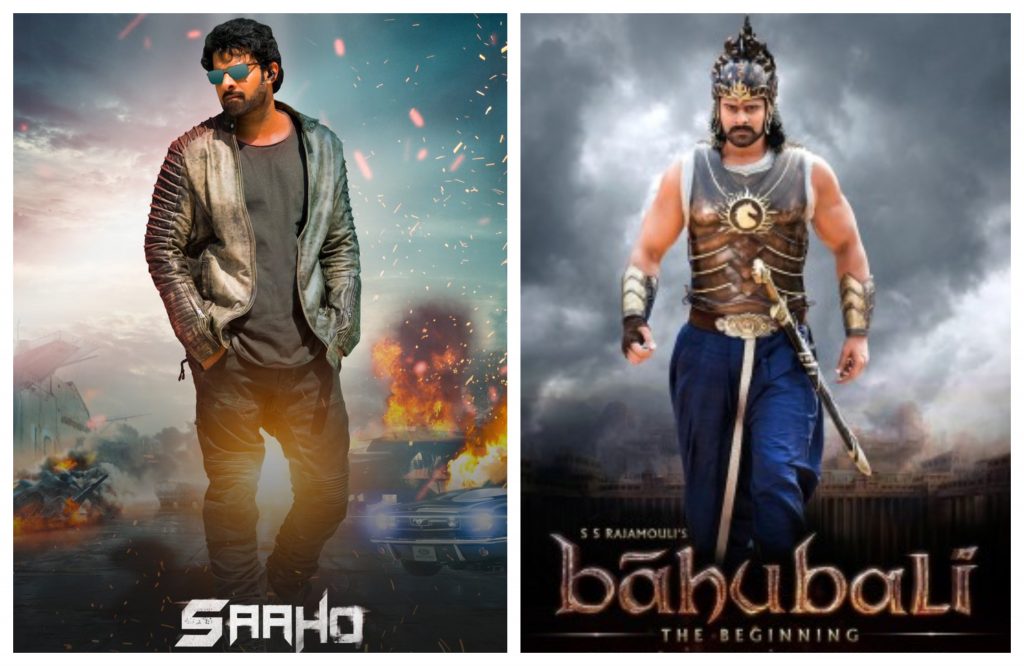
Prabhas’ last film Baahubali: The Conclusion (2017) went onto become a historic hit all over India and gave the actor a star status nationwide. Obviously, there was a keen interest to see him again on screen. His fans had to wait for more than two years to see Prabhas in action (literally) in director Sujeeth’s Saaho, which released this week.

From the trailers or the posters itself, Saaho looked way different from the two Baahubali movies. One is based few centuries ago while the other in today’s times. The earlier film gave importance to traditional Indian culture [because of its setting and era] while Saaho is about modern cars, bikes and clothes.

But what if I tell you that Saaho becomes like another Baahubali by the time it ends?  

Let’s look at the basic plot of Baahubali. Amarendra Baahubali is the rightful heir to the throne of the fictitious empire of Mahishmati but his enemies, who are people close to him, get him killed. Years later, his son Mahendra Baahubali eliminates the bad guys and acquires the throne.

Saaho and Baahubali

Now, this is what the story of Saaho looks like minus the many twists and sub-plots (SPOILERS ahead). Roy is heading his multimillionaire business in a fictitious city called Waaji. He gets killed by people close to him. Later on, his son finishes off the villains and sits on the chair of the owner of the company.

Now, I really wonder if the makers didn’t care about it or didn’t realize. Of course, it has to be the former.

But there are also a couple of other sequences in Saaho that remind us of Baahubali. The scene where Prabhas and Shraddha Kapoor are seen shooting the bad guys together instantly reminds you of the famous bow and arrow scene between Prabhas and Anushka Shetty in Baahubali.

The scene in the first Baahubali where hundreds of dangerous looking men speaking Kilikili language attack Amarendra Baahubali is still fresh in our minds. Similarly, in Saaho, hundreds of unusual blood-thirsty devils are seen attacking Prabhas.

Also read: Mission Mangal Review

The one major difference between Baahubali and Saaho is its content, but that’s a story for another day.

By: Keyur Seta

Filed Under: Bollywood Tagged With: Saaho Baahubali, Saaho similarity with Baahubali, Saaho spoilers, Saaho story

Mission Mangal Review – A joyride about India’s space achievement

August 18, 2019 by Keyur Seta 1 Comment

Director Jagan Shetty’s Mission Mangal revolves around the launch of India’s Mars Orbiter Mission (MOM), also known as Mangalyaan, which was launched in November 2013. India thus became the first nation in the world to successfully send a spacecraft to Mars in the first attempt itself.

The mission involved some painstaking efforts by a group of ISRO’s scientists led by Rakesh Dhawan (Akshay Kumar) and Tara (Vidya Balan) and their team consisting of Kritika (Taapsee Pannu), Neha (Kirti Kulhari), Varsha (Nithya Menen), Eka (Sonakshi Sinha), Parmeshwar (Sharman Joshi) and H G Dattatreya (Ananth Iyer).

The team had to battle various odds in the form of a senior ISRO member (Dalip Tahil) and lack of funds and confidence from the government. They had their various personal battles to counter as well.

Mission Mangal gives a proper explanation of the relevance of MOM, the process of launching it and its last stage. All this might sound very technical for a layman. But the film is nowhere near technical.

It is, in fact, a joyride. The narrative is filled with moments that get you in splits regularly. This is done through situations and character habits and traits. Many a times a funny moment arrives when you least expect it. The surprise inclusion of ‘Ankhiyaan Milaaun Kabhi Ankhiyaan Churaun’ by Sanjay Kapoor’s character himself is a masterstroke!

However, despite the humorous moments, Mission Mangal ensures that the seriousness of the topic is never lost whatsoever. Throughout the film, special care has been taken to explain space related scientific workings in a manner that even a person with poor scientific knowledge like me can easily understand. I had laughed at the puri scene in the trailer but realized that it perfectly fits the situation in the film to provide an easy explanation for a layman.

Mission Mangal poster

The combination of easy information and humour is enough to keep you glued for its duration of 133 minutes, which passes in a jiffy. And the moments in the finale keep you at the edge despite the fact that you are well aware that the mission will eventually become successful.

Having said this, there are few factors that bother you. The biggest one is that we haven’t been given any background about Akshay’s character. Considering he is the main lead, it was necessary. Few conversations from the subplot of few characters could also have been avoided. Thankfully, none of these fall in the major negative point zone.

Mission Mangal has an ensemble cast and not every character has got proper space, which is not surprising. But each character is given an interesting story and arc of its own (except Akshay, as mentioned above).

Every actor has risen to the occasion. Despite no character background, Akshay Kumar provides a fine mixture of seriousness and humour. This is easily one of his most noteworthy acts. Vidya Balan once again proves why she is the best of the current lot of actresses. She is adorable once again. Dalip Tahil makes his presence felt as an unusual antagonist.

It’s good to see Sharman Joshi in a mainstream film after long. He displays an undercurrent of humour and never overdoes it. The rest of the team members provide perfect support, especially the senior most Ananth Iyer.

Overall: Mission Mangal is a joyride that celebrates India’s space achievement. It will be argued that the makers have made it into a filmi affair. But as it is a feature film and, more importantly, succeeds in doing justice to the achievement of ISRO at the same time, it doesn’t turn out to be a problem.

Also read: How to donate for Maharashtra flood victims?

The film has had a good opening and it seems Mission Mangal will be a success at the box office. Akshay has never had a Rs 200 crore film. This is his good chance.

Rating: 4 out of 5

Review by: Keyur Seta

Filed Under: Bollywood Tagged With: Mission Mangal box office, Mission Mangal cast, Mission Mangal movie review, Mission Mangal opening, Mission Mangal real story

Book review: The Coup India Missed – Glimpse of an alternative India

August 12, 2019 by Keyur Seta 1 Comment

There have been various stories, both in the form of books and movies, which are inspired from real-life politics. But Lt. Col. K Gopinathan’s novel The Coup India Missed, is a rare tale that presents an alternative political India which, at the same time, is very familiar.

The most striking feature of the book is the inclusion of characters that are starkly similar to the real names of Indian politics. This not only comes across as interesting but also exciting for those who follow Indian politics. The author has given enough hints to easily make out whom the characters are modelled on.

Here are some of them:

— Baba is an ageing anti-corruption crusader who has brought the biggest anti-corruption movement in India prior to the 2014 general elections.

— Baba’s movement terribly hurts the corruption-laden Rashtriya Heritage Party (RHP) who has been in power in India since long. As per the name, the party always believes in nepotism over merit. The party is headed by an elderly lady. Her son is referred as the young prince whose dream is to be India’s next Prime Minister. His sister is more confident and fiery and her husband is charged in illegal land deals.

— The Maha Bharat Party (MBP) is a Hindu nationalist party. Their leader from Gujarat is considered the ideal Hindu Nationalist and is the Prime Ministerial candidate in the 2014 general elections.

— Likewise, there are mentions of a former Finance Minister from Tamil Nadu who is bespectacled and wears a lungi, a political heavyweight woman from the south and a powerful woman leader from the east.

The Coup India Missed

The story starts with Baba forming his own party filled with social workers and members of NGOs. Their party Rashtriya Punarudhaan Sangh (RPS), also known as the common man’s party, surprises everyone by its performance in the 2014 elections. However, their performance also ensures a hung house with nobody gaining enough numbers to form government at the centre.

After a lot of thinking and deliberation, RPS takes outside support from RHP despite its history of corruption and forms government at the centre. However, they lack a single candidate who could be the PM of India. Finally, after rounds of debate among the party, the eccentric professor-cum-politician Krishna Murthy is brought into the party and straightaway made the PM.

Gopinathan has smartly created a fictional plot based on real political happenings. The similarities, which are also seen in the plot developments, also get you in splits at times (not in a bad way). His knowledge about the socio-political situation in India and world politics is proved from how realistic the tale appears despite it showing an imaginary India.

Also read: Book Review – Decoding Life Post 8/11

Out of all the imaginary happenings, some appear over-ambitious. One thing you feel like questioning the most is the borderline Right Wing ideologies of Murthy and Baba’s party. Among other aspects, this is felt the most in Sanatana Dharma being adopted as India’s national belief and the clothes of the lawyers and judges being changed from black to orange.

But the actual negative point of The Coup India Missed is that the last 40 odd pages appear like content from a school or college textbook instead of a novel. This part provides too much of information with little storytelling.

Overall: Gopinathan’s The Coup India Missed is an interesting take on what should have happened in India from 2014 onwards.

Rating: 3.5 out of 5

Review by: Keyur Seta

Author: Lt. Col. K Gopinathan (retired)

Publishers: Leadstart Publishing

Price: Rs 249

Pages: 235

Also read: Book Review – Dance Of The Spirits

Filed Under: Literature Tagged With: Lt Col K Gopinathan, The Coup India Missed, The Coup India Missed K Gopinathan, The Coup India Missed Novel, The Coup India Missed Review

How to donate for Maharashtra flood victims?

August 12, 2019 by Keyur Seta 1 Comment

The deadly floods Maharashtra, especially in the Sangli and Kolhapur districts, have taken a number of lives and left plenty others homeless and in dire need of necessities to sustain. As per official figures, around 761 villages have been affected.

Hence, there is an urgent need to donate every day necessities to the victims in large numbers.

Maharashtra floods
NDRF officers rescuing people in Kolhapur (Photo: Skymetweather.com)

The items you can donate roughly includes:

Clothes
Food grains, sugar and salt
Packaged water
Biscuit and snacks packets
Soaps
Toothpastes and toothbrushes
Dettol or Savlon
Phenyl
Bleaching powder
Air freshners
New undergarments
Candles and matchboxes
Blankets and bed sheets
Basic medicines

If you are in Mumbai, Thane or Pune, you can donate to the following centres from August 10 to 14 from 10 am to 5 pm. This collection drive is organized by Akhil Bharatiya Marathi Natyaparishad and Akhil Bharatiya Marathi Chitrapat Mahamandal.

Mumbai:
1) Yashwantrao Chavhan Natyagruha, Matunga (West)
2) Prabhodhankar Thackeray Natyagruha, Borivali (West)

Thane:
1) Gadkari Rangayatan
2) Kashinath Ghanekar Natyagruha

Kalyan:
1) Natyaparishad Office
2) Acharya Atre Rangmandir

Pune:
Jawaharlal Nehru Sabhagruha (opposite Balgandharva Rangmandir)

Pimpri Chinchwad:
1) Natyaparishad Office
2) Pradhyapak Ramkrishna More Prekshagruha

Contact numbers for further assistance:

Mumbai: Ratnakant Jagtap 98201 47601
Pune: Vinod Satav 02025670406
Thane: Pushkar Desai 97690 05111

Monetary donation:

To donate money for the flood victims you can transfer the amount to Akhil Bharatiya Marathi Natyaparishad.
Details:
Bank: Saraswat Bank
Branch: Dadar, Kelkar Road
Account No: 006200100009417
IFSC Code: SRCB 0000006

(This article will be updated with more details)

Filed Under: National

Only time Tendulkar was NOT selected in team India, neither injured nor rested

August 4, 2019 by Keyur Seta 12 Comments

Throughout his career spanning 24 years, Sachin Tendulkar never went out of form. There was never a time when his spot in the team was in danger due to non-performance. This is one of the major reasons why he is considered a legend.

But there was one occasion when he wasn’t selected in the team for a series against Pakistan. And this wasn’t because of any injury or with the intention of giving him rest.

The month of September in mid and late 1990s brought the excitement of the Sahara Cup, a five match India-Pakistan ODI series in Toronto, Canada. The Toronto Cricket Skating and Curling Club used to be thronged by supporters from both countries that were treated to some quality cricket.

Circa September 1998, the Indian cricket fans were gearing up for another India v/s Pakistan series. But they were in for some disappointment this time around as Tendulkar wasn’t included in the squad for the Sahara Cup.

It so happened that the Commonwealth Games [CWG] clashed that year with the Sahara Cup. Cricket was included in the CWG for the first time during that edition [it hasn’t happened after that] which was played at Kuala Lumpur in Malaysia.

Sachin Tendulkar

As many as 16 teams participated to achieve cricket glory. The format was very much like the World Cup. There were four groups of four teams with one team from each group going into the semi-finals. Instead of one West Indies team, the series saw Jamaica, Antigua-Barbuda and Barbados play separately.

The Board of Control for Cricket in India [BCCI] were about to send a second string team for the Commonwealth Games, just like how Pakistan did. However, Suresh Kalmadi [guilty of corruption in the infamous 2010 CWG Scam] who was the President of the Indian Olympics Association then, put tremendous pressure on the BCCI to send a strong India team to the CWG.  

After a lot of negotiations, it was decided that India’s main squad will be divided into two for Sahara Cup and Commonwealth Games. As it happened, Sachin Tendulkar was selected to play at the CWG along with other big names like Anil Kumble, Ajay Jadeja, Robin Singh and Harbhajan Singh.

Also read: Sachin Tendulkar the bowler: 8 best bowling performances

Unfortunately, India couldn’t reach the semi-final stage as they won only one match out of the three against Canada with their match against Antigua-Barbuda being a no result due to the rains. India lost to Australia by being all out for just 109 while chasing a total of 256. [See all results of that year’s CWG HERE]

Meanwhile, by the time India were out of the CWG, they had lost the Sahara Cup too in the first four ODIs itself [see all results HERE]. But despite that, Tendulkar was sent to Toronto to play the last ODI. He scored an impressive 77 but India lost the match after Pakistan easily chased their total of 256.

Cricket will be returning to the next edition of the Commonwealth Games in 2022 in the form of Women’s T20.

By: Keyur Seta

Additional reading:

Who are Duckworth and Lewis and why ICC adopted their method?

WC Final 2019: Cricket won, ICC lost

When Australia played against Australia in this World Series

Filed Under: Cricket Tagged With: Commonwealth Games cricket, CWG 2022 cricket, Sachin Tendulkar, Sahara Cup

Who are Duckworth and Lewis and why ICC adopted their method?

July 28, 2019 by Keyur Seta 3 Comments

The Duckworth-Lewis Method instantly comes to our minds whenever a limited overs cricket match gets affected by rains. It’s a formula that decides the fate of a match in such situations. This is all I know about it as I am yet to come across anyone who perfectly understands the calculation. So we will not go into that.

But the bigger question which has been lingering in my mind is, who exactly are Duckworth and Lewis and why their calculation has been adapted by the International Cricket Council [ICC]?  

I decided to explore this. Hence, this article is also a personal learning for me as I went searching on the internet about Duckworth and Lewis.

As it turns out the method has been named after Frank Duckworth and Tony Lewis, the duo which brought about the calculation in rain affected matches.

*********************

Frank Duckworth:

Born in 1939, Frank Duckworth is a retired statistician from Lancashire, England. He has a BSc Hons in Physics and PhD in Metallurgy from the University of Liverpool. He has worked as a mathematical scientist for the nuclear power industry in the UK and is the editor of the Royal Statistician Society’s monthly news magazine called RSS News.

Apart from contributing in the Duckworth-Lewis method, he also singlehandedly developed the ‘Duckworth Scale,’ which can be read about HERE.

Duckworth and Lewis

Tony Lewis:

The life of Tony Lewis has been pretty much the same. Born in 1942, he also hails from Lancashire and holds degrees in statistics and mathematics from Sheffield University in the 1960s. He was a lecturer in Quantitative Research methods at Oxford Brookes University and University of the West of England. Currently, he is the chairman of the Western Operational Research Discussion Society.

*********************

Apart from this, nothing much is known about their personal lives. But recently there was an interesting article published in Dawn.com, which narrates how the two of them formed a duo and developed the Duckworth-Lewis Method.

To understand this, it is important to know the back story of rain affected matches in cricket. When ODI cricket was in its initial stages in the early 1970s, the cricket governing body adopted the rule of taking into consideration the run-rate of the teams.

It was an unfair method because it didn’t consider the number of wickets lost by a team. For example, if a team is chasing a score of 200, it should have at least 100 runs on board by the 25th over in order to be declared winners. However, the team will qualify to win even if it has lost 9 wickets to reach the score of 100 in 25 overs.

This rule was done away with in the 1990s and ‘Most Productive Overs’ rule was adopted, which turned out to be an embarrassment after the 1992 World Cup Semi-Final between England and South Africa. For the uninitiated, the latter needed 22 runs in 13 balls to win when the rains poured in. After resuming, as per the new method, needed 22 off just 1 ball.

In between in the 1980s, Duckworth had sent his own scoring formula to decide the fate of rain affected matches but it was rejected by the cricket governing body for being ‘too complicated.’

But he saw his chance after the debacle of the 1992 Semi Final. When he was giving a presentation of his method at Royal Statistical Society few months later, Tony Lewis, who was sitting in the audience, got interested in it.

Also read: WC Final 2019 – Cricket won, ICC lost

The two got together, worked out their formula, which came to be known as Duckworth-Lewis Method, and presented it to the cricket governing body which, was then called the ICC. Their formula was accepted since it also took into account the number of wickets lost by teams.

Their method was first implemented on 1 January 1997 in the England v/s Zimbabwe match at Harare. See the scorecard HERE.

Over the years, the method has received numerous criticisms for being unfair. In the same interview with the Dawn, Duckworth also honestly accepts that the method is not foolproof since it doesn’t take into consideration the identity and ability of batsmen who are yet to bat.

Their formula is reviewed and updated every two years. Duckworth and Lewis gave up looking after their formula six years ago as they decided to retire. They handed over its responsibility to Steven Stern, an Australian professor of statistics. Hence, the formula got a new name – DLS method – with the ‘S’ signifying Stern.  

Duckworth and Lewis were appointed Member of the Order of the British Empire [MBE] by Queen Elizabeth II in 2010.

Additional reading:
When hearing issues stopped India from winning against England

How Pakistan was saved by rains from a difficult situation in 1992 World Cup

Filed Under: Cricket Tagged With: DLS method in cricket, Duckworth Lewis caldulation, Duckworth Lewis rules, Who are Duckworth Lewis

WC Final 2019: Cricket won, ICC lost

July 16, 2019 by Keyur Seta 1 Comment

There is no doubt that we got to see one of the most exciting and tension-filled one day internationals yesterday between England and New Zealand. And this happening in the final of a tournament as huge as the ICC Cricket World Cup [2019] makes it immortal for cricket fans around the world.

The final of the most coveted cricket trophy being a tie and on top of that the Super Over also being a tie was unthinkable. In the end, I felt the luck was on England’s side as they just managed to sneak through as the new World Champions courtesy that infamous overthrow that got them 6 runs.

But the revelation by the former umpire Simon Taufel today that it was an error by the onfield umpires to grant six runs to England has made me feel too bad for New Zealand. As the ball hit Stokes’ bat before he completed the second run, it should have been only five runs.

See the incident again in the video

I don’t need to spell out the importance of that one run. That error was the reason why the men in Blue were holding the World Cup at the iconic Lords balcony yesterday.

It is still understandable for the umpires to make mistakes because they had to pay attention to too many things simultaneously. But why can’t the third umpire intervene in such situations? Or why did the onfield umpires didn’t deduct the one run after watching it on the big screen?

ICC logo

During India’s ODI against Australia in the DLF Cup in Kulala Lumpur in 2006, umpire Mark Benson gave Sachin Tendulkar out caught behind off Glenn McGrath.

However, as soon as he saw on the big screen that the ball had clearly hit Tendulkar’s shoulder, he called him back. Commentator Ian Bishop pointed out that the umpire has the right to change his decision if he does that promptly.

See the Sachin Tendulkar incident here

So, what stopped the onfield umpires and the third umpire from deducting one run? I am sure the third umpire must have seen the numerous replays. Why not use them for minimization of errors? And to think that this one decision stopped New Zealand from lifting the trophy makes me feel bad despite me not being a New Zealander.

The umpiring has been pathetic in this World Cup. On top of that, ICC has done nothing to solve it and is tight-lipped about it. In fact, they also went ahead and appointed Kumara Dharmasena as the umpire in the final despite his dismal run in this world cup.

But this is not the only factor where ICC messed up. Till yesterday I was unaware about this rule of the team with the most numbers of boundaries winning the match if the Super Over is a tie.

How on earth a team hitting more boundaries be declared a winner when it scored exactly the same amount of runs as the other team? Scoring the runs is important. It is irrelevant how they scored it.

A joke that is going around on social media is that England can say the won the World Cup but what if someone asks them by how many runs?

By the way, what would have happened if both teams had hit exactly the same number of boundaries? Make both the team compete in Gili Danda at the iconic Lords?

Also read: World Cup Final: Ben Stokes makes up for major slip up 3 years ago

The old saying ‘Game of cricket is the winner’ suits yesterday’s 2019 World Cup Final. The game indeed won.

But is it the ICC which has lost because of its unforgivable stupidity.

Not to forget, instead of such pressing issues, they were more concerned about the logo on Indian wicket-keeper Mahendra Singh Dhoni’s gloves.

By: Keyur Seta

Additional reading:

Yuvraj Singh’s 3 heroic TEST innings that have been forgotten: See videos

When hearing issues stopped India from winning against England

Filed Under: Cricket Tagged With: 2019 World Cup Final controversy, Super Over rule, World Cup Final Ben Stokes overthrow, World Cup final overthrow

World Cup Final: Ben Stokes makes up for major slip up 3 years ago

July 15, 2019 by Keyur Seta 1 Comment

The ICC Cricket World Cup 2019 Final, where Ben Stokes emerged a hero, has left us speechless like anything, no matter which corner of the world you live in. England and New Zealand have produced a match which was simply unthinkable!

I won’t believe if anyone claims to have expected the World Cup Final to end in a tie. On top of what, who would have expected the Super Over to end up in a tie as well. If anyone says that the 2019 World Cup Final was fixed, just laugh at him or her. You can’t script or fix such a match ever!

In the end, one does feel bad for New Zealand, more so because of the Super Over rule of team hitting more boundaries wins the match. [See the full scorecard HERE.]

One person who stood in between New Zealand and the World Cup was Ben Stokes with the bat. The all-rounder kept his nerve and played a brave knock of 84 not out to take England so close to the target. Of course, England were lucky to get that overthrow off Stoke’s bat, which was unintentional.

Ben Stokes in World Cup Final
Photo source: Cricinfo.com

It is obvious that stokes would be delighted with the result and why not! This is the first time that England has won the 50 over World Cup. But this final was also a moment of redemption for Stokes.

Let’s go back to 2016 at the Eden Gardens in Kolkata for the 2016 ICC World T20 Final between England and the West Indies. The English men looked good to pull the match off when West Indies needed as many as 19 off the last over with Ben Stokes about to bowl it.

Also Read: When Australia played against Australia in this World Series

The England all-rounder was devastated when Carlos Brathwaite hit him for four 6s in the first four balls of the over to get his side him in the most dramatic fashion.

The visuals of Stokes literally weeping after the last 6 was hit are still fresh in our memories. Although it was T20, it was a world title nevertheless.

But today Stokes made up for it in a tournament much bigger in stature.

By: Keyur Seta

Additional Reading:

When hearing issues stopped India from winning against England

How Pakistan was saved by rains from a difficult situation in 1992 World Cup

World Cup Final 2019
Photo source: ICC Facebook page

Filed Under: Cricket Tagged With: 2019 World Cup final fixed, 2019 World Cup Final reactions, Ben Stokes World Cup Final, Super Over rules, World Cup Final 2019, World Cup Final Super Over

World Cup: Only 2 interesting FINALS in last 6 editions

July 13, 2019 by Keyur Seta Leave a Comment

Australia and India, two of the favourites to win the ongoing 2019 ICC Cricket World Cup aren’t a part of the final tomorrow. Not many would have predicted an England-New Zealand final before the start of the tournament.

But the good thing is that for once we will get a new pair of hands holding the cup as none of the teams has ever won a World Cup before. This is the second final in a row for New Zealand. England, on the other hand, will be playing its fourth after 1975, 1987 and 1992 editions of the tournament.

Having these two teams also gives hope of the final to be interesting. Viewers like me, who roughly started watching cricket from the mid-1990s onwards have rarely got to enjoy an interesting World Cup final. This is largely because whenever Australia has entered the finals after 1996, the match has been boringly one-sided.

World Cup final venue Lords

Here’s revisiting last 6 World Cup finals:

1996 Final at Lahore
Australia: 241 for 7
Sri Lanka: 245 for 3
Perhaps the only final in last 24 years which was interesting despite Australia participating in it. Aravinda de Silva was the star of the match with one of the best innings in a World Cup final of 107 not out. He also picked up three wickets with the ball.

1999 Final at Lords
Pakistan: 132 all out
Australia: 133 for 2
This was the period from where Australia’s dominance in world tournaments begun. After getting the narrowest escape into the final, thanks to South Africa, the Aussies literally crushed Pakistan which ensured the most boring World Cup Final ever.

2003 Final at Johannesburg
Australia: 359 for 2
India: 234 all out
India had had a positive run in the tournament but it all fizzled out in the final. Australia literally hammered the opposition and cruised to victory. This was the second final in a row where the result was almost decided at half point.

2007 Final at Bridgetown
Australia: 281 for 4 in 38 overs
Sri Lanka: 215 for 8 in 36 overs [Target was 269 through Duckworth-Lewis method]
This wasn’t as one sided as the previous two World Cup Finals but it was boring to see Australia achieving a hat-trick of world glories. The unwanted rain made Sri Lanka’s target even difficult. This is the most unpopular World Cup of all. People hardly seem to discuss this edition.

2011 Final at Mumbai
Sri Lanka: 274 for 6
India: 277 for 4
Now this was the most interesting World Cup Final after 1996. Not just because India won but also speaking from the cricketing point of view. The first team somewhat breaks the morale of the opposition by smashing their bowlers in the end. The other team gets deep into trouble only to recover by a bold move of their captain. Mahendra Singh Dhoni’s 91 is one of the best World Cup innings.

Also read: How Pakistan was saved by rains from a difficult situation in 1992 World Cup

2015 Final at Melbourne
New Zealand: 183 all out
Australia: 186 for 3
We were back to the old story in the last World Cup Final. New Zealand was all out on the same score that India were in the 1983 final but history didn’t repeat. Despite losing Aaron Finch early, it was a cakewalk for Australia towards its fifth World Cup title.

For the 2019 World Cup Final tomorrow, England and New Zealand look almost evenly matched, although the former has a slight upper hand. Fans of both countries would surely want their team to win. But all we are asking for is an interesting final that isn’t one-sided. This is something we haven’t often got to see in our careers as cricket fans.

By: Keyur Seta

Additional reading:

When hearing issues stopped India from winning against England

Yuvraj Singh’s 3 heroic TEST innings that have been forgotten: See videos

Filed Under: Cricket Tagged With: 2019 Cricket World Cup prediction, Cricket World Cup Finals scorecard, Cricket World Cup trivia, World Cup Final 2019 prediction

  • « Previous Page
  • 1
  • …
  • 24
  • 25
  • 26
  • 27
  • 28
  • …
  • 93
  • Next Page »

Like Us on Facebook

Like Us on Facebook

Pages

  • About Me

Categories

  • Bollywood
  • Cricket
  • Documentaries
  • Environment
  • Events
  • Food
  • Forgotten Moments
  • Gujarati Cinema
  • Health
  • Hollywood
  • Humour
  • International Cinema
  • Literature
  • Marathi movies
  • Miscellaneous
  • Mumbai
  • Music
  • National
  • Personal experience
  • Pictures
  • Plays
  • Poem/ Shayaris
  • Regional cinema
  • Rumour Alert
  • Short Films
  • Socio/Political
  • Spiritual
  • Travel
  • TV
  • Uncategorized
  • Web Series
  • Young Achievers

Subscribe to Blog via Email

Enter your email address to subscribe to this blog and receive notifications of new posts by email.

Join 44 other subscribers

Archives

  • November 2025 (4)
  • October 2025 (2)
  • September 2025 (6)
  • August 2025 (3)
  • July 2025 (2)
  • June 2025 (5)
  • May 2025 (4)
  • April 2025 (7)
  • March 2025 (5)
  • February 2025 (1)
  • January 2025 (4)
  • December 2024 (2)
  • November 2024 (3)
  • October 2024 (2)
  • September 2024 (4)
  • August 2024 (2)
  • July 2024 (3)
  • June 2024 (4)
  • May 2024 (1)
  • April 2024 (2)
  • March 2024 (2)
  • February 2024 (4)
  • January 2024 (4)
  • December 2023 (2)
  • November 2023 (3)
  • October 2023 (3)
  • September 2023 (4)
  • August 2023 (3)
  • July 2023 (2)
  • June 2023 (2)
  • May 2023 (4)
  • April 2023 (4)
  • March 2023 (2)
  • February 2023 (1)
  • January 2023 (3)
  • December 2022 (2)
  • November 2022 (6)
  • October 2022 (7)
  • September 2022 (2)
  • August 2022 (2)
  • July 2022 (2)
  • June 2022 (4)
  • May 2022 (4)
  • April 2022 (4)
  • March 2022 (4)
  • February 2022 (3)
  • January 2022 (3)
  • December 2021 (3)
  • November 2021 (2)
  • October 2021 (3)
  • September 2021 (4)
  • August 2021 (3)
  • July 2021 (5)
  • June 2021 (2)
  • May 2021 (5)
  • April 2021 (3)
  • March 2021 (4)
  • February 2021 (4)
  • January 2021 (4)
  • December 2020 (6)
  • November 2020 (4)
  • October 2020 (6)
  • September 2020 (4)
  • August 2020 (6)
  • July 2020 (3)
  • June 2020 (2)
  • May 2020 (3)
  • April 2020 (4)
  • March 2020 (3)
  • February 2020 (3)
  • January 2020 (2)
  • December 2019 (3)
  • November 2019 (4)
  • October 2019 (3)
  • September 2019 (2)
  • August 2019 (4)
  • July 2019 (6)
  • June 2019 (6)
  • May 2019 (4)
  • April 2019 (1)
  • March 2019 (2)
  • February 2019 (5)
  • January 2019 (5)
  • December 2018 (6)
  • November 2018 (4)
  • October 2018 (4)
  • September 2018 (3)
  • August 2018 (3)
  • July 2018 (2)
  • June 2018 (4)
  • May 2018 (2)
  • April 2018 (2)
  • March 2018 (2)
  • February 2018 (3)
  • January 2018 (3)
  • December 2017 (3)
  • November 2017 (3)
  • October 2017 (3)
  • September 2017 (3)
  • August 2017 (1)
  • July 2017 (4)
  • June 2017 (2)
  • May 2017 (3)
  • April 2017 (2)
  • March 2017 (3)
  • February 2017 (3)
  • January 2017 (4)
  • December 2016 (4)
  • November 2016 (3)
  • October 2016 (4)
  • September 2016 (2)
  • August 2016 (5)
  • July 2016 (4)
  • June 2016 (2)
  • May 2016 (4)
  • April 2016 (4)
  • March 2016 (4)
  • February 2016 (4)
  • January 2016 (5)
  • December 2015 (6)
  • November 2015 (4)
  • October 2015 (4)
  • September 2015 (8)
  • August 2015 (6)
  • July 2015 (5)
  • June 2015 (5)
  • May 2015 (10)
  • April 2015 (7)
  • March 2015 (4)
  • February 2015 (9)
  • January 2015 (11)
  • December 2014 (9)
  • November 2014 (10)
  • October 2014 (11)
  • September 2014 (9)
  • August 2014 (7)
  • July 2014 (7)
  • June 2014 (2)
  • May 2014 (4)
  • April 2014 (5)
  • March 2014 (1)
  • February 2014 (2)
  • January 2014 (4)
  • December 2013 (6)
  • November 2013 (8)
  • October 2013 (4)
  • September 2013 (2)
  • August 2013 (5)
  • July 2013 (2)
  • June 2013 (2)
  • May 2013 (7)
  • April 2013 (8)
  • March 2013 (11)
  • February 2013 (10)
  • January 2013 (14)
  • December 2012 (11)
  • November 2012 (6)
  • October 2012 (12)
  • September 2012 (15)
  • August 2012 (18)
  • July 2012 (14)
  • June 2012 (14)
  • May 2012 (7)
  • April 2012 (12)
  • March 2012 (14)
  • February 2012 (12)
  • January 2012 (17)
  • December 2011 (13)
  • November 2011 (12)
  • October 2011 (7)
  • September 2011 (4)
  • August 2011 (14)
  • July 2011 (6)
  • June 2011 (5)
  • May 2011 (5)
  • April 2011 (11)
  • March 2011 (4)
  • February 2011 (3)
  • January 2011 (6)
  • December 2010 (3)
  • November 2010 (2)
  • October 2010 (2)
  • September 2010 (1)
  • August 2010 (2)
  • July 2010 (3)
  • June 2010 (3)
  • May 2010 (1)
  • April 2010 (1)
  • March 2010 (3)
  • February 2010 (4)
  • January 2010 (3)
  • December 2009 (3)
  • November 2009 (4)
  • October 2009 (2)
  • September 2009 (2)
  • August 2009 (6)
  • July 2009 (3)

Copyright © 2025 · eleven40 Pro Theme on Genesis Framework · WordPress · Log in