The Common Man Speaks

Piano For Sale (Marathi Play) Review

December 2, 2018 by Keyur Seta 2 Comments

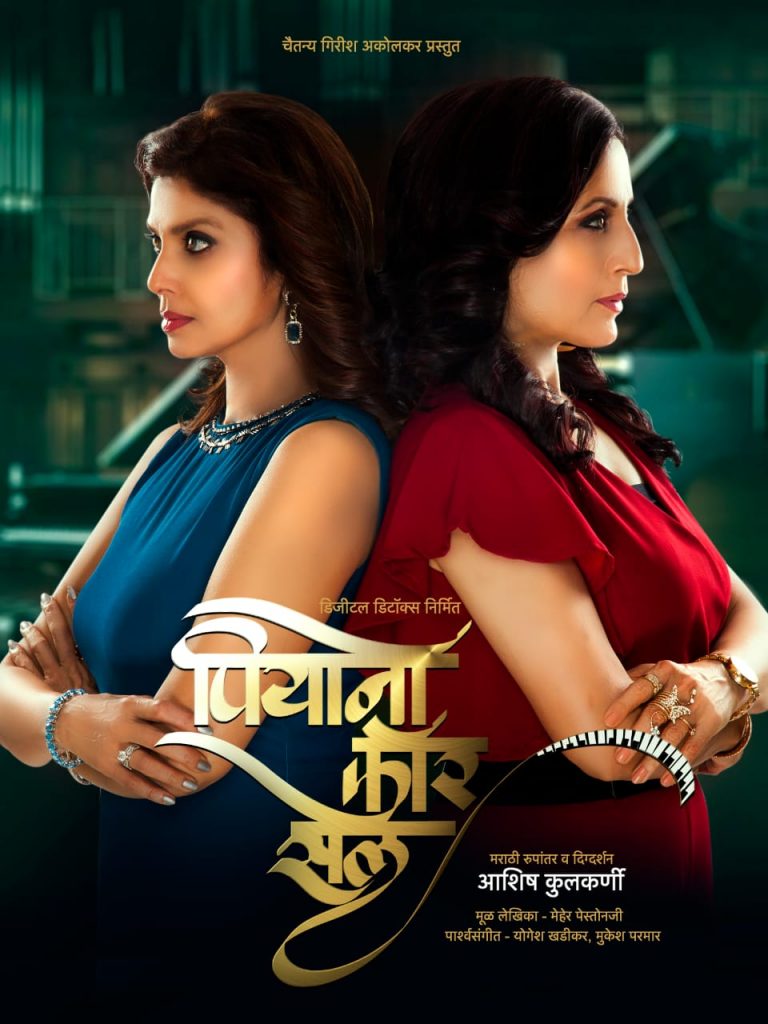
Director Aashish Kulkarni’s Marathi play Piano For Sale features veteran actresses Kishori Shahane Vij and Varsha Usgaonkar. They were two big names and contemporaries in Marathi cinema of the 1990s.

This is the first occasion where Shahane and Usgaonkar have shared the stage together. As the play has no other characters apart from them, there is no need to say that one would get to see their jugalbandi on stage.

But for a play or any piece of performing art for that matter it is the end product that needs to be impressive. The cast comes later. Let’s find out if Piano For Sale manages that.

The play is the Marathi adaptation of playwright Meher Pestonji’s English play of the same name. Sheila (Shahane) stays alone in the middle-class Byculla area of Mumbai. She is a dance teacher for mute and deaf students. She is quite content with her simple lifestyle, although she does experience feelings of loneliness here and there.

Anita (Usgaonkar) is the opposite of Sheila. She is married and has a daughter. They belong to the upper class and she is proud of her status.

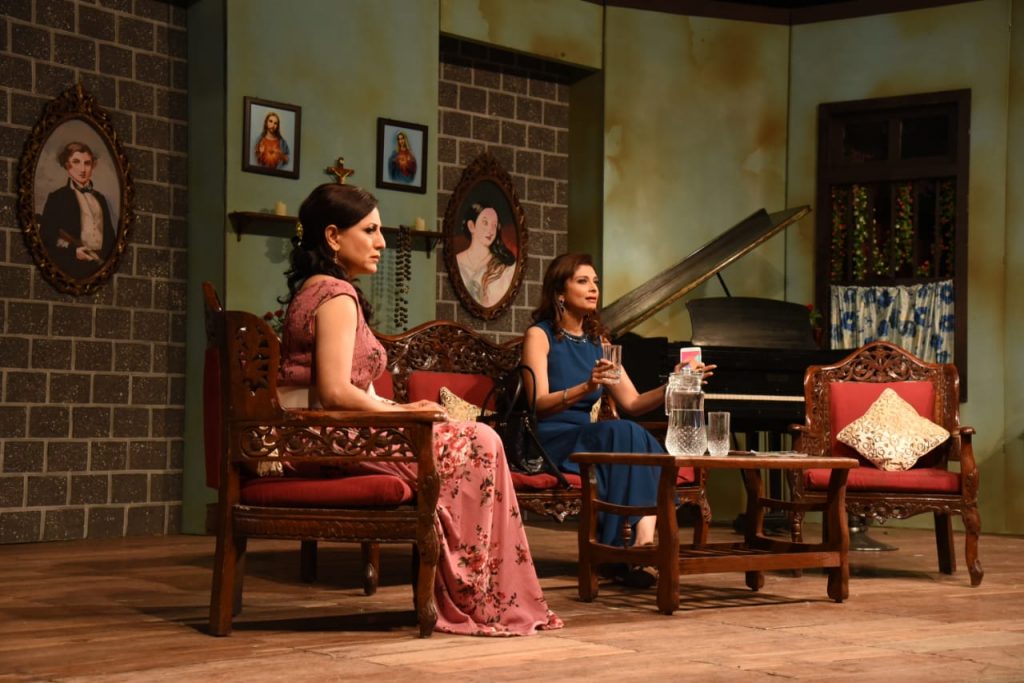
Piano For Sale playSheila wants to sell off her old piano, for which she gives an advertisement. Anita gets interested in buying it and calls Sheila. While hanging up the call, Anita reveals her full name. This stuns Sheila since she and Anita have had a past and not a pleasant one at that.

Going by its interesting storyline, it is not surprising to see the reason for adapting the play from another language. Just when you think that the story will continue based on the conflict that was established early on, it takes you by surprise through a twist in the second act (post interval).

The end result turns out to be moving as it compels you to think on the idea of winners and losers in matters of love and life.

Needless to say, when the entire play is only about conversation between two characters, the script needs to be engaging and this is what happens for the majority of the duration. The dialogues and the subtle dark humour are enough to keep you engaged.

It is only on few occasions that the transition from one topic to another isn’t entirely smooth though. Also, the massive transformation of one character later on is a bit questionable.

A lot of thought has gone into the rich set designing. The interiors of both the houses – of Sheila and Anita – are realistic. Coming to the lights, it was a smart idea to dim the brightness whenever the conversation became intense and conflicting. The sounds of piano go well with the subject and the title.

Needless to say, the play demanded both Shahane and Usgaonkar to be on top of their games. The two actresses have complemented each other well and, in doing so, have provided convincing performances.

Overall: Piano For Sale is an interesting and thought-provoking play.

Rating: 3.5 out of 5

Review by: Keyur Seta

Director and English adaptation: Aashish Kulkarni

Original playwright: Meher Pestonji

Producers: Digital Detoxx

Cast: Kishori Shahane Vij and Varsha Usgaonkar

Varsha Usgaonkar, Kishori Shahane Vij

Filed Under: Plays Tagged With: Marathi drama review, Marathi natak review, Marathi play review, Piano For Sale Marathi play, Piano For Sale Marathi play review, Piano For Sale play review, Piano For Sale review

Short story: Under the shade in the rainy evening in Bharatpur

November 25, 2018 by Keyur Seta 1 Comment

The sun had set in Bharatpur that evening but it wasn’t dark at the market road. The workers of the Jan Raksha Party (JRP) were burning effigies of a leader from the ruling Lok Seva Party (LSP) after he allegedly made a derogatory remark against their leader.

The JRP workers were sweating in their pink T-shirt bearing the abbreviation of their party in the already humid town but they didn’t care. How dare he insult their beloved leader?

Their victorious reverie was broken when a group of supporters of LSP started raising slogans against the said JRP leader. They felt their leader did the right thing. They too were oblivious to their sweaty purple T-shirts bearing the abbreviation of their respective parties. But both parties were united in not caring for the general office going population that was having difficulty while going home after a long and tiring day at work.

Such was the state of affairs in Bharatpur these days. The town was divided between LSP and JRP; between pink and purple. Earlier it was only their supporters who were at loggerheads. But slowly, common people too clinged onto any one side and developed enmity against those who were on the ‘other’ side. So what if they have been their close friends or even family members all these years?

The colleges regularly saw tussles and arguments between both set of supporters. But since recent times, even offices saw heated conversations between those who were otherwise well-educated and mature.

The scene was the same even in the virtual world of social media and What’s App. More than the IT cells of these parties, the common people were energetically creating posts to bash and insult the other side. Both parties were saving a lot of money since the common people were ready to publicize them and their agendas for free.

Mumbai Monsoon

When the general public felt such enmity for people from the ‘other’ side, one can just imagine the hatred between the official party workers of both parties. They literally couldn’t see eye to eye.

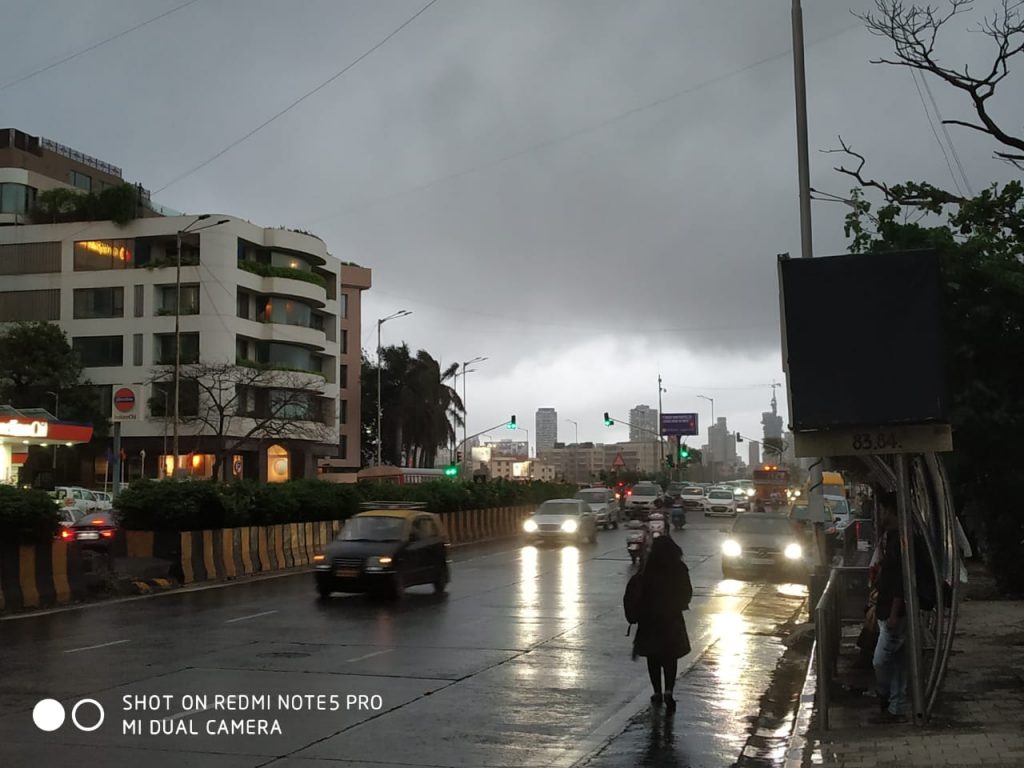
The mobs of both groups were showing no signs of stopping. Hence, it took some divine intervention in the form of unseasonal December rain. What started as a drizzle soon transformed into heavy rain and storm-like situation. To make matters worse, the electricity went off.

The general public, which was running helter skelter, was now confused. Ajit, a man in his mid-20s, ushered inside the entrance of a shop that was shut. As he was moved inside the roof properly to escape the rain water, his body his someone. It was a man in his 50s who too was there as he had to save himself from the rain and it was too dark to try going home.

After an awkward moment, they spoke and soon introduced themselves. The man in his 50s was Rameshchandra. The two were glad to have each other’s company to combat this difficult situation. Ajit realized that Rameshchandra was feeling uneasy.

When Ajit caringly prodded further, he revealed that he is diabetic and needed water. Ajit promptly handed him a bottle from his bag in the dark. Rameshchandra thanked him. He then he noticed that Ajit was limping a bit. Now it was Rameshchandra’s turn to caringly prod him about his uneasiness.

Ajit explained how his leg got hit to the street lamp pole in the dark while he was hurriedly getting under the roof. Rameshchandra handed him a little bottle of a balm which he always carried for his headache. He said the balm works even for the kind of injury Ajit suffered. Then Ajit remembered the slogan of the balm’s advertisement, ‘Ek balm, teen kaam’ and they had a hearty laugh.

There was massive age gap between the two of them but they didn’t feel it. Difficult circumstances can even bring two people from different age groups together in a human way. Both decided in their minds that they would like to keep in touch. They were no longer thinking about the uneasiness caused by their wet T-shirts.

Just then the electricity returned and the road lights were on. They were glad but as soon as their eyes fell on each other, they were stunned. They were wearing pink and purple T-shirts respectively.

By: Keyur Seta

Filed Under: Literature Tagged With: short English stories, Short stories in English, Short story, Short story on politics, Short story politics

Box office: Ani… Dr Kashinath Ghanekar worked only because Thugs Of Hindostan failed?

November 18, 2018 by Keyur Seta 1 Comment

The Marathi movie Ani… Dr Kashinath Ghanekar has turned out to be a success at the box office. The Subodh Bhave starrer has been attracting the audience right from its release on 8 November. In fact, the shows of the films have increased in the last few days and the producers have claimed that right now it has around 6000 shows in India.

Directed by Abhijeet Shirish Deshpande and also starring Sonali Kulkarni, Sumeet Raghvan and Vaidehi Parshurami, the biopic on the superstar of Marathi theatre Dr Kashinath Ghanekar has been widely accepted by audience and critics alike.

The film was pitted against the biggest Bollywood movie Thugs Of Hindostan, which saw the union of two of the biggest superstars Amitabh Bachchan and Aamir Khan for the first time ever.

The Vijay Krishna Acharya directorial, however, wronged all the box office predictions by turning out to be a flop. It is the most expensive Hindi film till date with a cost as enormous as around Rs300 crore. After 10 days the film has earned only Rs137.25 crore in India.

Ani Dr Kashinath Ghanekar

There have been talks on the social media that Ani… Dr Kashinath Ghanekar has worked at the box office only because Thugs Of Hindostan has failed. How true is it?

In my personal opinion, it is not true whatsoever. When a Marathi film gains wide acceptance, it really doesn’t matter if any other film it released with worked or failed, no matter how big it is.

This can be proven by a simple recent example. During the 2015 Diwali period, Salman Khan and Rajshri Productions joined hands after a long time for Prem Ratan Dhan Payo. On the same day, two big Marathi films Katyar Kaljat Ghusli and Mumbai Pune Mumbai 2 also released.

Prem Ratan Dhan Payo turned out to be a superhit. But despite that, both Marathi films remained unaffected and managed to attain success at the box office.

If the success of one Hindi film didn’t affect two other Marathi films, it is obvious that the success of one Hindi film wouldn’t have affected one Marathi film released on the same day.

By: Keyur Seta

Filed Under: Marathi movies Tagged With: Ani Dr Kashinath Ghanekar box office, Dr Kashinath Ghanekar box office, Kashinath Ghanekar box office, Kashinath Ghanekar collections, Kashinath Ghanekar vs Thugs Of Hindostan

Ani… Dr Kashinath Ghanekar Review – A biopic in real sense

November 9, 2018 by Keyur Seta 2 Comments

Biopics have become a new fad in mainstream Hindi cinema over the years. While some turn out to be impressive, some don’t. But the common factor in almost all these films is that the protagonist is glorified and in some cases their dark deeds are whitewashed. This is where director Abhijeet Shirish Deshpande’s Ani… Dr Kashinath Ghanekar differs. The film doesn’t shy away from showing the negative or dark side of the person in question.

The film is based on the life of the superstar of Marathi theatre Dr Kashinath Ghanekar (Subodh Bhave), who ruled the stage from 1960s to 1980s. Although he was a practicing dentist, there came a time when he got more attracted to acting in plays. He started off by being a prompter for other actors.

Ghanekar finally got his big break in the role of Sambhaji in the play Raigadala Jevha Jaag Yete. After some hiccups, he later found success in the role of Lalya in Ashrunchi Jhali Phule. This increased his popularity and he became a star of the masses.

However, his personal life with his wife Irawati (Nandita Dhuri) took a beating. Ghanekar’s arrogance and superiority complex also added to his problems. If this wasn’t enough, the emergence of the very talented bloke Dr Shriram Lagoo (Sumeet Raghvan) threatened his position.

The Marathi film Rangkarmi (2013) was based on a man who becomes a theatre star but arrogance takes the better of him and he ultimately succumbs to alcoholism. But it was a fictional film. Another major difference is that Rangkarmi wasn’t well-made.

Dr Kashinath Ghanekar movie

The subject of Ani… Dr Kashinath Ghanekar relies heavily on production design and this area is taken care of. The scenes of old Bombay, especially the entrance of Shivaji Mandir and the road, appear believable.

But the film’s real triumph was the convincing narration of Ghanekar’s life. This was possible since the writing, direction and acting were in sync. It is impossible for us to know how exactly Ghanekar behaved and how the various events in his life played out. But whatever we were shown appeared realistic and at the same time it went with the massy nature of the film.

The arrival of Ghanekar as Shambhaji and his comeback as Lalya are events that bring in the effect. The craze for the superstar through his famous utterances like ‘Kadaaak’ and ‘Usme Kya Hai?’ are sure to gain popularity.

Ghanekar’s personal life was such that it was impossible to not focus on it. His conflict with his wife, love for Kanchan and closeness to actor Prabhakar Panshikar are woven naturally in the script.

The no-holds-barred attitude of the film is what makes Ani… Dr Kashinath stand out. Iconic living figures like Dr Shriram Lagoo and Sulochana didi having hard feelings for Ghanekar is something we don’t associate our biopics with. But there are chances that the serious rivalry between Ghanekar and Lagoo might not go down well with some.

The one thing that makes the film look incomplete is that Ghanekar’s early life is not explored. It is necessary to know as to why and how he developed such admiration for theatre despite being a practicing dentist.

The subject needed Subodh Bhave to give one of his best performances and this is exactly what he has done. The actor has lived the character of Ghanekar while displaying various emotions with ease. Despite showing arrogance, he doesn’t let him appear negative ever.

He isn’t the only actor with a difficult task. Sumeet Raghvan walks the razor’s edge and doesn’t either overdo or underdo while playing Lagoo. He is terrific. Anand Ingle, (Vasant Kanetkar), Nandita Dhuri, Sonali Kulkarni (Sulochana didi) and Mohan Joshi (Bhalji Pendharkar) too fall in the same league.

Vaidehi Parshurami, the youngest in the cast, doesn’t falter or let the presence of such stalwarts affect her performance. She is surely a lookout for the future.

Overall: Ani… Dr Kashinath Ghanekar is a kind of a biopic you don’t get to see often here. The film is expected to earn big at the box office despite it releasing with a biggie like Thugs Of Hindostan.

Rating: 3.5/5

Review by: Keyur Seta

Director: Abhijeet Shirish Deshpande

Producers: Viacom 18 Motion Pictures

Writers: Abhijeet Shirish Deshpande and Guru Thakur

Cast: Subodh Bhave, Anand Ingle, Sonali Kulkarni, Sumeet Raghvan, Nandita Dhuri, Vaidehi Parshurami, Mohan Joshi

Genre: Biopic

Runtime: 160 minutes

Filed Under: Marathi movies Tagged With: Dr Kashinath Ghanekar box office, Dr Kashinath Ghanekar life story, Dr Kashinath Ghanekar review, Kashinath Ghanekar movie review, Kashinath Ghanekar review, Kashinath Ghanekar Thugs Of Hindostan

When a statue is used to massage egos…

November 4, 2018 by Keyur Seta Leave a Comment

The sunrise at Mahishmati is no longer accompanied by the sweet chirping of the birds. Over the last few months, the construction work of our ruler Bhallaladeva’s gold statue is in full swing. The noise of the hammering emerge daily at the stroke of dawn and continue till sunset.

Never before have I ever been devoid of the pleasing early morning sounds in my 45 years of life. But I have to get on with my work. The vicinity of the gurukul where I teach is surrounded by dense green trees. This helps in keeping the sound at bay. But the quality of air is surely affected.

Along with the destruction of nature, what puts a huge question mark on the statue is the fact that an unthinkable amount is spent in making and erecting it. It pains to see such crazy spending on a mere statue when hundreds of its citizens are homeless. On top of that, the farmers and peasants too are going through the worse phase of poverty since last few years.

The rulers are, obviously, aware of this. But they, especially the father-son duo of Bijjaladeva and Bhallaladeva, are more concerned in flaunting their power. Proving their supremacy is their biggest priority even as a number of citizens struggle to survive.

Bhallaladeva statue

Protesting against the statue is out of question. Many tried it and suffered the consequences. Bhallaladeva used his force to crush every protest. He won’t do it directly. People lower in his rank carry out such tasks on his behalf.

Mahishmati has now reached a stage where even constructive criticism of the rulers is considered suicidal. Along with his highly paid workers, a large number of people from the general population have also started advocating for Bhallaladeva with all dedication.

Strong image building exercises coupled with his brilliant oratory skills have captured the minds and hearts of these citizens. For them, Bhallaladeva is the most powerful and the only person worth ruling Mahishmati. Even if you differ with them politely, you get branded the enemy of the land. Their blind worship has broken plenty of friendships over the years.

Their common justification for the statue is that it will provide employment to a lot of people who are engaged in building it. They fail to understand that the enormous amount of money will not only save the lives of hundreds of starving citizens but will also ensure that nobody gets into that condition in the near future.

The other day I got quite a jolt while I was teaching. A scuffle between two groups of kids took place. Further query brought to my notice that few students lost their temper when few other merely questioned the need for a statue. I was more disappointed than surprised. Since recent times I have come to realize that there is no definite link between common sense and education.

I wish building statues, even of great people, doesn’t continue in the future but I see little hope. Who knows? Centuries later some other ruler might play a trick by building a statue of a great ruler of the past just to massage his own ego.

Filed Under: Socio/Political Tagged With: Baahubali statue, Bhallaladeva statue, Bhallaladeva story, Need for statues in India, Reasons for having statue, Statue, Statue meaning

Why MeToo can be a long term solution for both genders across industries

October 14, 2018 by Keyur Seta Leave a Comment

Tanushree Dutta’s sexual misconduct allegations against Nana Patekar last month made headlines for days and continue to do so. But we didn’t expect it to be the starting point of a major MeToo movement across India that would empower women to speak up against sexual harassment or rape they were subjected to by people in power.

It is, obviously, not logical to take sides in the Tanushree and Patekar case because we were not present at the spot where the incident allegedly took place. But we can’t deny that this allegation is solely responsible for starting the #MeToo movement.

Nothing is proved in the Tanushree’s case but there have been a number of instances since more than a week where the culprits have accepted their guilt and apologized. There are a couple of major recent cases where neither the allegations are proven nor the accused have accepted their guilt. But going by the inside information I have received, it is not possible to be neutral against them. However, that’s a different story.

It is astonishing how regularly allegations are coming up these days. In fact, in the last week we were on high alert as multiple allegations were popping up after, literally, every few hours.

The effect of the victims speaking up has been so strong that director Sajid Khan and Patekar had to step down from their ambitious project Housefull 4. It also compelled one of the biggest stars of India, Akshay Kumar, to take a stand and cancel the shoot of the film. In a latest update, Khan has been removed from the film and replaced by Farhad Samji.

MeToo

This is the extent to which the #MeToo has sent shockwaves across the film industry. This means that the predators would now think 10 or more times before committing any such acts. Who knows when their screenshots, pictures or videos would be out and their reputation tarnished.

The victims were able to speak up because of the effect of social media. Going by this and the fact that the victims have finally found the courage to speak up, it is not going to stop them from naming and shaming the perpetrators from here on. Social media also provides an option of exposing someone by being anonymous, as we have seen in recent cases. Hence, if the naming and shaming continues, it might change the scenario drastically.

#MeToo can also be used in incidents like casting couch. Asking sexual favours in return for a role is also sexual exploitation. A friend of mine, who was once a struggling actress in regional cinema, was told by a director on chat, “I can give you the role if you become my girlfriend for some time.” If the victims in such cases start sharing screenshots of such chats, it might well create fear in the minds of those who indulge in casting couch.

God forbid if the moment dies down in the coming weeks, there will always be this danger for the perpetrators of someone exposing their misdeeds any time in the future. After all, social media is here to stay.

The word ‘me’ is gender neutral. So, it can be used by men too who often get harassed or exploited. Also, it is not at all necessary for the movement to be restricted to the film industry alone. Harassment happens across industries and is not just limited to sexual. A boss targeting his subordinate by making him/ her work extra hours or verbally abusing him/ her also comes under harassment.

There is a lot that can come under #MeToo.

However, like many other things in the world, this initiative also has a flipside. One thing that can severely damage the movement is fake accusations; either to take some sort of a revenge or for any other reason. Fake claims can destroy whatever good the movement has done so far.

The last thing we need is political stooges using #MeToo to gain brownie points over their political opponents.

By: Keyur Seta

Filed Under: Bollywood, Socio/Political Tagged With: #MeToo movement, Me Too, Me Too in India, Me Too in other industries, Me Too meaning, Me Too movement criticism, Me Too movement future, What is Me Too movement

Terra (Bengali Short Film) Review

October 7, 2018 by Keyur Seta 1 Comment

Director Debjani Bandopadhyay’s short film Terra (which translates to ‘Land’) takes place in the mountainous regions of Purulia in West Bengal. It tells the story of an officer (Anindyo Banerjee) who works for a company that is slowly snatching away the land and natural resources of the region for monetary gains. He has a troubled relationship with his wife Bibha (Tanushree Sarkar), who is of the opposite ideology.

The narrative takes its own pace but this works well as it slowly sucks you into this intense world where the greed of few people has made life hell for many others. The peaceful location being the opposite of the conditions of the victims is established creatively. Two parallel tracks about main issue and the personal conflict of Bibha are smartly woven.

Terra short filmTerra tilts towards the victims but it doesn’t preach anything. It just presents the whole scenario as it is. But at the same time it steers clear from being a docu drama.

Despite the writing and direction departments being impressive, the technical department doesn’t cease to impress you throughout. The camerawork (Subal KR), background score and editing (Golam Mustafa Prokash) are applaud worthy.

But it’s the sound designing (Siba Sankar Das) that stands out and how. The minutest sounds of nature appear realistic even when seen on a mobile phone.

The only minus point is an incident which brings some amount of confusion. It, thankfully, doesn’t affect you much.

Acotr Tanushree Sarkar, Surojit Sen, Anindyo Banerjee and child actor Sourav Mura have come up with natural performances that play a large role in adding reality.

Overall: Terra is a finely crafted short film. It won’t be an overstatement that the director is ready to take a plunge in feature films.

Rating: 4 out of 5

Review by: Keyur Seta

Filed Under: Regional cinema Tagged With: Bengali short films, Bengali short movies, Debjani Bandopadhyay, Short films in Bengali, Terra Bengali short film, Terra short film review

Andhadhun Review

October 6, 2018 by Keyur Seta Leave a Comment

The very first scene of Andhadhun is about a rabbit trying to save his life from a hunter. The film then moves onto the main story while you wonder about the relevance of the first shot. It is brought in later during a crucial moment. This scene and several others are enough to guess that this is a Sriram Raghavan movie.

Andhadhun takes place in Pune where Akash (Ayushmann Khurrana) lives a simple life as a blind piano player. He ‘accidentally’ meets a bubbly young girl Sophie (Radhika Apte). They become close and she gets him employed at a bar as a musician-cum-singer. The place is owned by retired actor Pramod Sinha (Anil Dhawan), who was a star during his heydays.

Sinha requests Akash to do a private concert at his residence for him and his wife Simi (Tabu). Akash’s single visit at Sinha’s residence changes his life forever.

Mainstream Hindi cinema is guilty of using loud background sounds to provide thrill. This largely happens when the script lacks thrill. But like most of his films, Raghavan just lets the subtle unfolding of the story provide natural thrill. The background score, which is smart over here, is only a by-product.

Andhadhun posterThe first half of Andhadhun is full of mysterious moments. The twists and turns stun as well as provide laughter. Although the humour is dark, it never gets into the depressing zone. It is not often that the proceedings bring out different emotions at the same time. For example, the situation of Akash is helpless but it provides thrill as well as humour at the same time.

Andhadhun is also one rare film which could be understood even by those who don’t know Hindi. Very few Hindi films let the visuals narrate the story in such an effective manner.

After such an exciting first half, one would, naturally, expect the same experience later. However, the thriller quotient reduces a bit post-interval and a couple of events appear questionable. Thankfully, the climax makes up for it. The very last shot is a masterstroke.

I personally feel all of Raghavan’s films fall in the James Hadley Chase zone, excluding Agent Vinod (2012), in terms of the story, narrative and characters. Andhadhun also lies right there.

The technical aspects are top notch. K U Mohanan’s edgy camerawork adds to the thrill. A lot of the background music is piano sounds as it goes with the subject. The scene where a serious crime is taking place while soft piano sounds are played in the background brings back memories of how the romantic song ‘Kuchh Toh Hai Tujhse Raabta’ is played out during a shootout scene in Agent Vinod.

The songs are decent you don’t really care about the music in such films. The promotional title song is impressive and catchy but it isn’t used in the film and rightly so. It wouldn’t have suited the end credits.

The actors have lived up to what was expected of them. Ayushmann Khurrana is thoroughly believable as a mysterious artist. This wasn’t an easy performance by any means but he is up to the task. Radhika Apte is effective as a fiery young girl.

Tabu has a much bigger role, which required her expertise. Her act will be talked about for long. Anil Dhawan, who makes a comeback, leaves behind a terrific impact despite the short length of his role. He provides unintentional laughter too, which was intentional. Manav Vij lives his evil character and speaks through expressions.

Other supporting actors like Zakir Hussain and Chhaya Kadam also chip in with mature performances.

Overall: Andhadhun is an exciting thriller that has a stamp of Sriram Raghavan’s genius all over. The film hasn’t opened to a good number at the box office. But its collections should rise in the days to come.

Rating: 4 out of 5

Review by: Keyur Seta

Director: Sriram Raghavan

Producers: Viacom 18 Motion Pictures and Matchbox Pictures

Writers: Sriram Raghavan, Arijit Biswas, Pooja Ladha Surti, Yogesh Chandekar and Hemant Rao

Cast: Ayushmann Khurrana, Radhika Apte, Tabu, Anil Dhawan, Manav Vij

Music: Amit Trivedi, Raftaar and Girish Nakod

Genre: Thriller

Runtime: 138 minutes

Filed Under: Bollywood Tagged With: Andhadhun box office, Andhadhun climax, Andhadhun hit or flop, Andhadhun movie review, Andhadhun review, Andhadhun spoilers, Andhadhun story

Home Sweet Home: To choose between Mumbai and Bombay

October 2, 2018 by Keyur Seta Leave a Comment

Hrishikesh Joshi’s Marathi movie Home Sweet Home portrays a conflict between an aged couple Shyamal (Reema Lagoo) and Vidyadhar Mahajan (Mohan Joshi). They stay in Dadar, the central hub of Mumbai, where real estate prices have surged higher than the city’s iconic Rajabai Tower.

Shyamal is eager to sell off their house for a colossal amount of over Rs 3 crore and migrate to a place further. The price of the new flat is much lesser than Rs 3 crore, which meant that they would also get to lay their hands on a big sum. Vidyadhar, however, is against the idea. He is emotionally attached to not only the house but also the locality.

The two characters appeared like many others I have witnessed all my life while staying in the same area. There are a lot of Shyamals religiously visiting the famous Swami Samartha math. At the same time, you can spot innumerable Vidyadhars doing early morning Yoga unconvincingly. Their everyday sarcastic conflicts are replicas of what was shown between the couple.

Home Sweet Home Marathi movieThe character of the estate agent, which is played by Joshi himself, reminded me of my grandmother’s conversations with her fellow estate agent friends. I have grown up witnessing the practice of a ‘party’ inspecting a prospective flat and the nervous undertones of the situation.

Home Sweet Home, obviously, seems like a personal story between two individuals. But it goes much deeper. The film actually portrays the current state of Mumbai where people residing in prime areas like Dadar are compelled to move to suburbs for ‘better’ standards of living.

Shyamal and Vidyadhar symbolize the two sides of the city right now. While some areas have rapidly built skyscrapers where every service available at your fingertips, there are still others that have retained the old Bombay charm.

The thought process of the two individuals represents two types of Mumbaikars currently. One wanting to be practical and move on with development, while the other clinging onto traditions and roots. In other words, it’s a conflict between Mumbai and Bombay. The proverb, ‘Mumbai is a name, Bombay is an emotion,’ which is viral on social media, is felt here throughout.

Before Home Sweet Home, Mahesh Bhatt’s Saaransh (1984) provided such local appeal on celluloid. In fact, the characters of Home Sweet Home remind you of characters of the Anupam Kher and Rohini Hattangadi starrer.

Also read: Manto released in the week when freedom of expression succumbed to a new low

Saaransh was about an aged couple staying alone and both having conflicting views. They had a female paying guest whose modern ways bothered them. The story also took place in the same locality. [Not implying that both films are similar in any way]

Coming back to the dilemma, I have seen a lot of families either choosing the mind or heart when faced with such a situation. My family was faced with the same dilemma for years. The choice was finally made this year. We did some adjustments in the house and went with the heart.

By: Keyur Seta

Filed Under: Marathi movies Tagged With: Home Sweet Home Marathi movie, Home Sweet Home Marathi review, Home Sweet Home Marathi story, Home Sweet Home movie, Home Sweet Home movie review, Home Sweet Home Reema Lagoo

Manto released in the week when freedom of expression succumbed to a new low

September 22, 2018 by Keyur Seta Leave a Comment

Nandita Das’ Manto, which is a biopic on the literary genius Saadat Hasan Manto, is based in the late 1940s and early 1950s. But after watching the Nawazuddin Siddiqui and Rasika Dugal starrer, it doesn’t come across as a period film.

No, this is not a criticism towards the production design or any creative side about the film. The situation of the protagonist wherein he is made to look like a criminal for merely showing the mirror to the society reminds us of the current times. This is unfortunate as it reflects how little has changed in these 70 years after Independence.

This is not the only aspect about the film that portrays today’s era in the imaginary parallel screen inside your mind. There is a moment when the editor of a newspaper advises Manto on writing something halka-phulka (light-hearted) this time around because truth hurts.

In one scene, Manto tries making an audience understand how past invaders are blamed every time we question the authorities about the current pressing issues. This appears right out of the silly comments made by quite a few ‘leaders’ who blame the Mughals, British or Pandit Nehru for the current mess they have created.

Manto elaborates his point by passionately telling the people, “Sab peechhe dekh rahe hain, lekin aaj ke kaatil lahu aur lohe se tareekh likhte ja rahe hain.”

But the audience doesn’t take him seriously. They symbolize those who have become puppets in the hands of loud-mouthed ‘news’ anchors who can create enemies of the nation at their will in order to hide the dark acts of some people.

Manto poster

Apart from the content, the time of the release of Manto turned out to be the most ironical one could imagine. The film arrived just in the week when suppression of freedom of expression succumbed to a new low.

Earlier this week, Salman Khan changed the name of his upcoming production from Loveratri to Loveyatri after a lawyer and fringe organizations objected to it for allegedly hurting ‘religious’ sentiments.

Soon after, the producers of Manmarziyaan made three cuts in the film because some Sikh organizations objected to it. As per the director of the film Anurag Kashyap, he was not even informed about it.

Abhishek Bachchan, who plays one of the leads in Manmarziyaan, justified the cuts yesterday at an event and went onto say that he has no problems with it (read more about it HERE).

What has come as a rude surprise is that the producers of both films readily agreed to the demands without trying to defend their rights as artists, leave alone showing any fight. More importantly, there were hardly any serious protests; nowhere near to what happened with Udta Punjab (2016) and Padmaavat (2018).

If the big names of the industry are ready to succumb even in front of minor protests, spare a thought for a low budget independent filmmaker who can be victimized even for an actor’s hairstyle. To say that they have set a dangerous precedent is a mild way of putting it.

They have ensured that Manto shall,  unfortunately, remain relevant even 70 years from now.

By: Keyur Seta

Filed Under: Bollywood, National, Socio/Political Tagged With: Manto comparison today's times, Manto movie, Manto movie message, Manto movie story, Manto Nandita Das, Manto Nawazuddin Siddiqui

  • « Previous Page
  • 1
  • …
  • 28
  • 29
  • 30
  • 31
  • 32
  • …
  • 93
  • Next Page »

Like Us on Facebook

Like Us on Facebook

Pages

  • About Me

Categories

  • Bollywood
  • Cricket
  • Documentaries
  • Environment
  • Events
  • Food
  • Forgotten Moments
  • Gujarati Cinema
  • Health
  • Hollywood
  • Humour
  • International Cinema
  • Literature
  • Marathi movies
  • Miscellaneous
  • Mumbai
  • Music
  • National
  • Personal experience
  • Pictures
  • Plays
  • Poem/ Shayaris
  • Regional cinema
  • Rumour Alert
  • Short Films
  • Socio/Political
  • Spiritual
  • Travel
  • TV
  • Uncategorized
  • Web Series
  • Young Achievers

Subscribe to Blog via Email

Enter your email address to subscribe to this blog and receive notifications of new posts by email.

Join 44 other subscribers

Archives

  • November 2025 (4)
  • October 2025 (2)
  • September 2025 (6)
  • August 2025 (3)
  • July 2025 (2)
  • June 2025 (5)
  • May 2025 (4)
  • April 2025 (7)
  • March 2025 (5)
  • February 2025 (1)
  • January 2025 (4)
  • December 2024 (2)
  • November 2024 (3)
  • October 2024 (2)
  • September 2024 (4)
  • August 2024 (2)
  • July 2024 (3)
  • June 2024 (4)
  • May 2024 (1)
  • April 2024 (2)
  • March 2024 (2)
  • February 2024 (4)
  • January 2024 (4)
  • December 2023 (2)
  • November 2023 (3)
  • October 2023 (3)
  • September 2023 (4)
  • August 2023 (3)
  • July 2023 (2)
  • June 2023 (2)
  • May 2023 (4)
  • April 2023 (4)
  • March 2023 (2)
  • February 2023 (1)
  • January 2023 (3)
  • December 2022 (2)
  • November 2022 (6)
  • October 2022 (7)
  • September 2022 (2)
  • August 2022 (2)
  • July 2022 (2)
  • June 2022 (4)
  • May 2022 (4)
  • April 2022 (4)
  • March 2022 (4)
  • February 2022 (3)
  • January 2022 (3)
  • December 2021 (3)
  • November 2021 (2)
  • October 2021 (3)
  • September 2021 (4)
  • August 2021 (3)
  • July 2021 (5)
  • June 2021 (2)
  • May 2021 (5)
  • April 2021 (3)
  • March 2021 (4)
  • February 2021 (4)
  • January 2021 (4)
  • December 2020 (6)
  • November 2020 (4)
  • October 2020 (6)
  • September 2020 (4)
  • August 2020 (6)
  • July 2020 (3)
  • June 2020 (2)
  • May 2020 (3)
  • April 2020 (4)
  • March 2020 (3)
  • February 2020 (3)
  • January 2020 (2)
  • December 2019 (3)
  • November 2019 (4)
  • October 2019 (3)
  • September 2019 (2)
  • August 2019 (4)
  • July 2019 (6)
  • June 2019 (6)
  • May 2019 (4)
  • April 2019 (1)
  • March 2019 (2)
  • February 2019 (5)
  • January 2019 (5)
  • December 2018 (6)
  • November 2018 (4)
  • October 2018 (4)
  • September 2018 (3)
  • August 2018 (3)
  • July 2018 (2)
  • June 2018 (4)
  • May 2018 (2)
  • April 2018 (2)
  • March 2018 (2)
  • February 2018 (3)
  • January 2018 (3)
  • December 2017 (3)
  • November 2017 (3)
  • October 2017 (3)
  • September 2017 (3)
  • August 2017 (1)
  • July 2017 (4)
  • June 2017 (2)
  • May 2017 (3)
  • April 2017 (2)
  • March 2017 (3)
  • February 2017 (3)
  • January 2017 (4)
  • December 2016 (4)
  • November 2016 (3)
  • October 2016 (4)
  • September 2016 (2)
  • August 2016 (5)
  • July 2016 (4)
  • June 2016 (2)
  • May 2016 (4)
  • April 2016 (4)
  • March 2016 (4)
  • February 2016 (4)
  • January 2016 (5)
  • December 2015 (6)
  • November 2015 (4)
  • October 2015 (4)
  • September 2015 (8)
  • August 2015 (6)
  • July 2015 (5)
  • June 2015 (5)
  • May 2015 (10)
  • April 2015 (7)
  • March 2015 (4)
  • February 2015 (9)
  • January 2015 (11)
  • December 2014 (9)
  • November 2014 (10)
  • October 2014 (11)
  • September 2014 (9)
  • August 2014 (7)
  • July 2014 (7)
  • June 2014 (2)
  • May 2014 (4)
  • April 2014 (5)
  • March 2014 (1)
  • February 2014 (2)
  • January 2014 (4)
  • December 2013 (6)
  • November 2013 (8)
  • October 2013 (4)
  • September 2013 (2)
  • August 2013 (5)
  • July 2013 (2)
  • June 2013 (2)
  • May 2013 (7)
  • April 2013 (8)
  • March 2013 (11)
  • February 2013 (10)
  • January 2013 (14)
  • December 2012 (11)
  • November 2012 (6)
  • October 2012 (12)
  • September 2012 (15)
  • August 2012 (18)
  • July 2012 (14)
  • June 2012 (14)
  • May 2012 (7)
  • April 2012 (12)
  • March 2012 (14)
  • February 2012 (12)
  • January 2012 (17)
  • December 2011 (13)
  • November 2011 (12)
  • October 2011 (7)
  • September 2011 (4)
  • August 2011 (14)
  • July 2011 (6)
  • June 2011 (5)
  • May 2011 (5)
  • April 2011 (11)
  • March 2011 (4)
  • February 2011 (3)
  • January 2011 (6)
  • December 2010 (3)
  • November 2010 (2)
  • October 2010 (2)
  • September 2010 (1)
  • August 2010 (2)
  • July 2010 (3)
  • June 2010 (3)
  • May 2010 (1)
  • April 2010 (1)
  • March 2010 (3)
  • February 2010 (4)
  • January 2010 (3)
  • December 2009 (3)
  • November 2009 (4)
  • October 2009 (2)
  • September 2009 (2)
  • August 2009 (6)
  • July 2009 (3)

Copyright © 2025 · eleven40 Pro Theme on Genesis Framework · WordPress · Log in