The Common Man Speaks

Ani… Dr Kashinath Ghanekar Review – A biopic in real sense

November 9, 2018 by Keyur Seta 2 Comments

Biopics have become a new fad in mainstream Hindi cinema over the years. While some turn out to be impressive, some don’t. But the common factor in almost all these films is that the protagonist is glorified and in some cases their dark deeds are whitewashed. This is where director Abhijeet Shirish Deshpande’s Ani… Dr Kashinath Ghanekar differs. The film doesn’t shy away from showing the negative or dark side of the person in question.

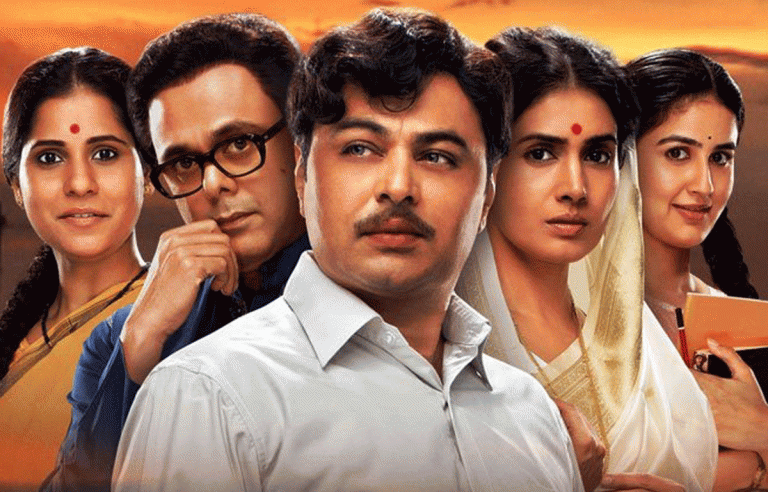
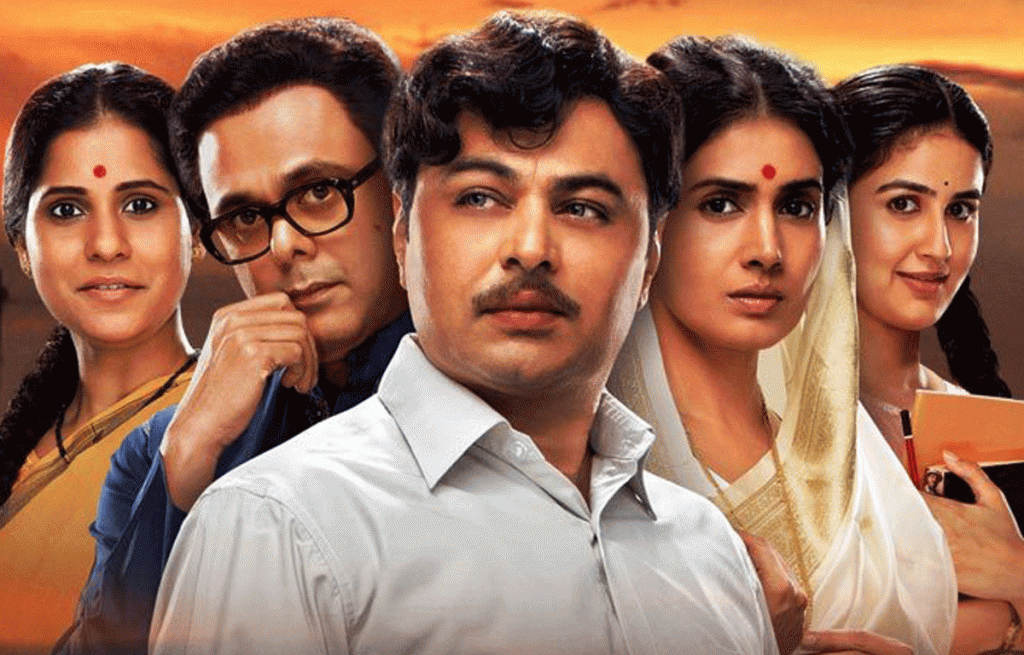
The film is based on the life of the superstar of Marathi theatre Dr Kashinath Ghanekar (Subodh Bhave), who ruled the stage from 1960s to 1980s. Although he was a practicing dentist, there came a time when he got more attracted to acting in plays. He started off by being a prompter for other actors.

Ghanekar finally got his big break in the role of Sambhaji in the play Raigadala Jevha Jaag Yete. After some hiccups, he later found success in the role of Lalya in Ashrunchi Jhali Phule. This increased his popularity and he became a star of the masses.

However, his personal life with his wife Irawati (Nandita Dhuri) took a beating. Ghanekar’s arrogance and superiority complex also added to his problems. If this wasn’t enough, the emergence of the very talented bloke Dr Shriram Lagoo (Sumeet Raghvan) threatened his position.

The Marathi film Rangkarmi (2013) was based on a man who becomes a theatre star but arrogance takes the better of him and he ultimately succumbs to alcoholism. But it was a fictional film. Another major difference is that Rangkarmi wasn’t well-made.

Dr Kashinath Ghanekar movie

The subject of Ani… Dr Kashinath Ghanekar relies heavily on production design and this area is taken care of. The scenes of old Bombay, especially the entrance of Shivaji Mandir and the road, appear believable.

But the film’s real triumph was the convincing narration of Ghanekar’s life. This was possible since the writing, direction and acting were in sync. It is impossible for us to know how exactly Ghanekar behaved and how the various events in his life played out. But whatever we were shown appeared realistic and at the same time it went with the massy nature of the film.

The arrival of Ghanekar as Shambhaji and his comeback as Lalya are events that bring in the effect. The craze for the superstar through his famous utterances like ‘Kadaaak’ and ‘Usme Kya Hai?’ are sure to gain popularity.

Ghanekar’s personal life was such that it was impossible to not focus on it. His conflict with his wife, love for Kanchan and closeness to actor Prabhakar Panshikar are woven naturally in the script.

The no-holds-barred attitude of the film is what makes Ani… Dr Kashinath stand out. Iconic living figures like Dr Shriram Lagoo and Sulochana didi having hard feelings for Ghanekar is something we don’t associate our biopics with. But there are chances that the serious rivalry between Ghanekar and Lagoo might not go down well with some.

The one thing that makes the film look incomplete is that Ghanekar’s early life is not explored. It is necessary to know as to why and how he developed such admiration for theatre despite being a practicing dentist.

The subject needed Subodh Bhave to give one of his best performances and this is exactly what he has done. The actor has lived the character of Ghanekar while displaying various emotions with ease. Despite showing arrogance, he doesn’t let him appear negative ever.

He isn’t the only actor with a difficult task. Sumeet Raghvan walks the razor’s edge and doesn’t either overdo or underdo while playing Lagoo. He is terrific. Anand Ingle, (Vasant Kanetkar), Nandita Dhuri, Sonali Kulkarni (Sulochana didi) and Mohan Joshi (Bhalji Pendharkar) too fall in the same league.

Vaidehi Parshurami, the youngest in the cast, doesn’t falter or let the presence of such stalwarts affect her performance. She is surely a lookout for the future.

Overall: Ani… Dr Kashinath Ghanekar is a kind of a biopic you don’t get to see often here. The film is expected to earn big at the box office despite it releasing with a biggie like Thugs Of Hindostan.

Rating: 3.5/5

Review by: Keyur Seta

Director: Abhijeet Shirish Deshpande

Producers: Viacom 18 Motion Pictures

Writers: Abhijeet Shirish Deshpande and Guru Thakur

Cast: Subodh Bhave, Anand Ingle, Sonali Kulkarni, Sumeet Raghvan, Nandita Dhuri, Vaidehi Parshurami, Mohan Joshi

Genre: Biopic

Runtime: 160 minutes

Filed Under: Marathi movies Tagged With: Dr Kashinath Ghanekar box office, Dr Kashinath Ghanekar life story, Dr Kashinath Ghanekar review, Kashinath Ghanekar movie review, Kashinath Ghanekar review, Kashinath Ghanekar Thugs Of Hindostan

Home Sweet Home: To choose between Mumbai and Bombay

October 2, 2018 by Keyur Seta Leave a Comment

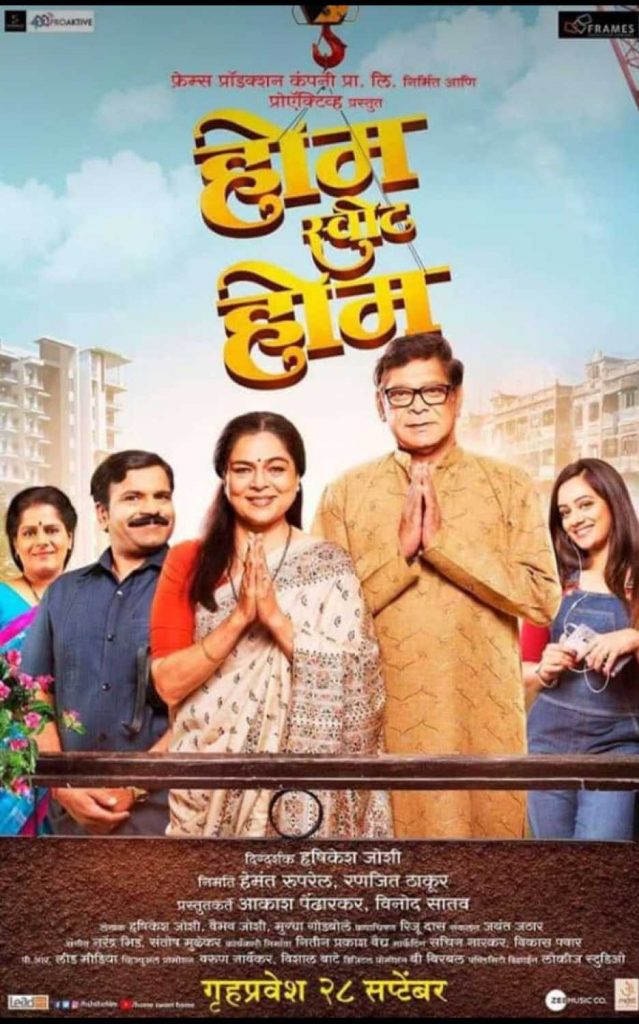
Hrishikesh Joshi’s Marathi movie Home Sweet Home portrays a conflict between an aged couple Shyamal (Reema Lagoo) and Vidyadhar Mahajan (Mohan Joshi). They stay in Dadar, the central hub of Mumbai, where real estate prices have surged higher than the city’s iconic Rajabai Tower.

Shyamal is eager to sell off their house for a colossal amount of over Rs 3 crore and migrate to a place further. The price of the new flat is much lesser than Rs 3 crore, which meant that they would also get to lay their hands on a big sum. Vidyadhar, however, is against the idea. He is emotionally attached to not only the house but also the locality.

The two characters appeared like many others I have witnessed all my life while staying in the same area. There are a lot of Shyamals religiously visiting the famous Swami Samartha math. At the same time, you can spot innumerable Vidyadhars doing early morning Yoga unconvincingly. Their everyday sarcastic conflicts are replicas of what was shown between the couple.

Home Sweet Home Marathi movieThe character of the estate agent, which is played by Joshi himself, reminded me of my grandmother’s conversations with her fellow estate agent friends. I have grown up witnessing the practice of a ‘party’ inspecting a prospective flat and the nervous undertones of the situation.

Home Sweet Home, obviously, seems like a personal story between two individuals. But it goes much deeper. The film actually portrays the current state of Mumbai where people residing in prime areas like Dadar are compelled to move to suburbs for ‘better’ standards of living.

Shyamal and Vidyadhar symbolize the two sides of the city right now. While some areas have rapidly built skyscrapers where every service available at your fingertips, there are still others that have retained the old Bombay charm.

The thought process of the two individuals represents two types of Mumbaikars currently. One wanting to be practical and move on with development, while the other clinging onto traditions and roots. In other words, it’s a conflict between Mumbai and Bombay. The proverb, ‘Mumbai is a name, Bombay is an emotion,’ which is viral on social media, is felt here throughout.

Before Home Sweet Home, Mahesh Bhatt’s Saaransh (1984) provided such local appeal on celluloid. In fact, the characters of Home Sweet Home remind you of characters of the Anupam Kher and Rohini Hattangadi starrer.

Also read: Manto released in the week when freedom of expression succumbed to a new low

Saaransh was about an aged couple staying alone and both having conflicting views. They had a female paying guest whose modern ways bothered them. The story also took place in the same locality. [Not implying that both films are similar in any way]

Coming back to the dilemma, I have seen a lot of families either choosing the mind or heart when faced with such a situation. My family was faced with the same dilemma for years. The choice was finally made this year. We did some adjustments in the house and went with the heart.

By: Keyur Seta

Filed Under: Marathi movies Tagged With: Home Sweet Home Marathi movie, Home Sweet Home Marathi review, Home Sweet Home Marathi story, Home Sweet Home movie, Home Sweet Home movie review, Home Sweet Home Reema Lagoo

Gulabjaam (Marathi Movie) Review

February 18, 2018 by Keyur Seta 2 Comments

Sachin Kundalkar is known for narrating modern stories rooted in traditionalism. He has, especially, maintained this balance in his last three efforts, Happy Journey (2014), Rajwade And Sons (2015) and Vazandar (2016).

He has done the same with Gulabjaam. But this time, he has also bettered his own recipe (which was already pretty good) several notches higher resulting in one of the most delicious dishes one would taste in a long time.

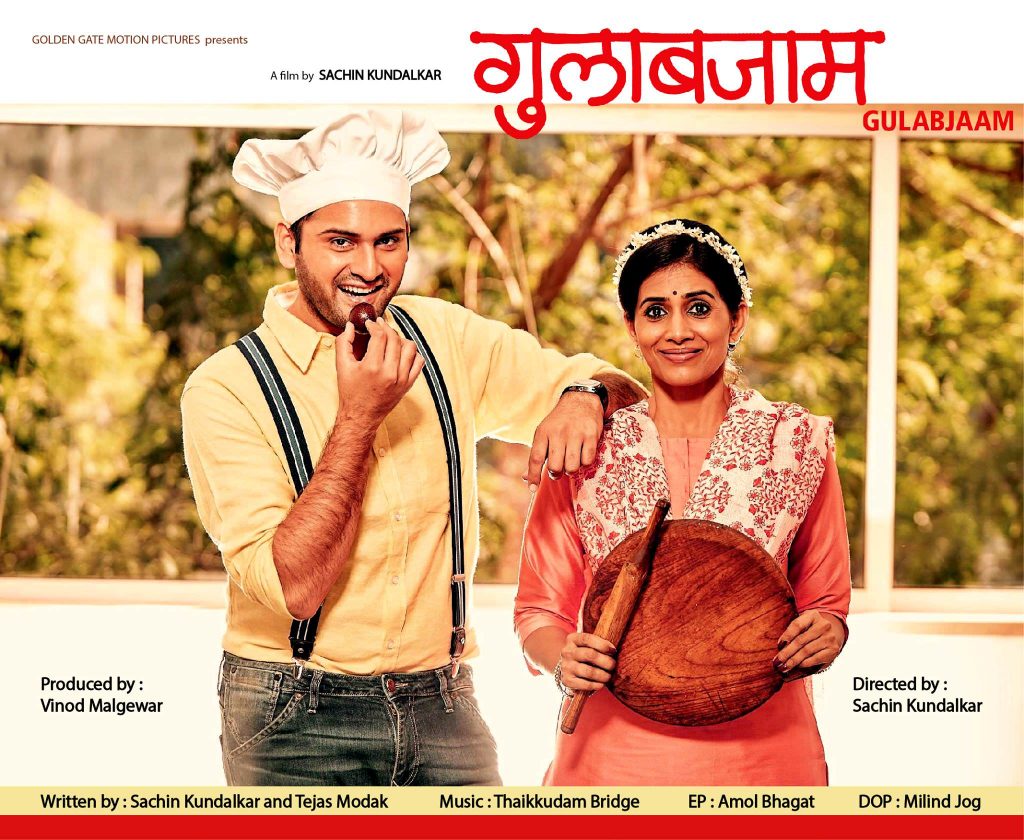
Gulabjaam is about Aditya Naik’s (Siddharth Chandekar) struggle to learn Marathi cuisine in order to open a restaurant in London, where he is settled. He quits his high paying job and secretly visits Pune for his mission. After tasting food from a lunch box, especially gulabjaam, he deeply gets reminded of the food cooked by his mother.

After learning that the lunch box was prepared by Radha Agarkar (Sonali Kulkarni), he instantly decides to learn cooking from her. However, he realizes that the lady is not only a recluse but also rude who doesn’t like anybody’s presence around her. Will Aditya succeed in his mission? Why is Radha the way she is?

Gulabjaam posterIt is rare to see food or cooking being a catalyst to connect two characters in an Indian film.  But it is one of the most unusual and complex relationship to deal with for the writer and director. This is not just because Radha and Aditya are from different age groups and worlds. Their personal journey and diverse natures makes it all the more unlikely for them to form a bond.

To achieve this convincingly and that too with constant humour is the biggest masterstroke here. Plus, throughout the film their relationship remains undefined, which makes it more charming. We don’t often get to see strong and deep relationships that are kept unnamed.

Like Kundalkar’s previous works, Gulabjaam is more like a smooth journey rather than merely a story. You don’t realize when a quirky encounter of two diverse human beings transforms into a tale of deep personal sufferings inspite of the funny and light-hearted mood. The climax might not be ideal for some. But it is certainly garnished with the hope of inner wounds getting healed someday.

The only flaw is the incident of Radha realizing that Aditya has stealthily sneaked into her house and stolen food. One would expect her to scream but she doesn’t. However, the effect of the consequence of this scene makes you ignore it.

Kundalkar has also continued his legacy of getting the technical aspects right. There are numerous moments where one can notice cinematographer Milind Jog’s craft. The background score is unconventional and effective. It follows the important rule of not making the audience realize about its arrival and departure in a scene. The editing also deserves similar praise.

The nature of Radha’s character demanded her home to appear as if it is stuck in a period long gone by. This is achieved perfectly by the art director Poorva Pandit Bhujbal. It would be unfair not to mention food stylists Sayali Rajadhyaksha and Shweta Bapat for their work plays a big role in adding visual quality to the subject.

Sonali Kulkarni and Siddharth Chandekar’s characters are deep and vulnerable, which makes them realistic. But they appear deeply relatable only because of their respective performances. Kulkarni’s act can only be called masterful. She gets the diverse facets like agony and homour with utmost perfection.

With her constant presence, Chandekar might not appear as impressive. But he certainly gets his act of a boyish man constantly trying to move out of his trapped world quite right. Madhura Deshpande, the actors playing Popat and the old lady also impress in the opportunity they get.

Rating: 4.5/5

Review by: Keyur Seta

Director: Sachin Kundalkar

Writers: Sachin Kundalkar and Tejas Modak

Producers: Zee Studios and Golden Gate Motion Pictures

Cast: Sonali Kulkarni, Siddharth Chandekar

Genre: Drama

Runtime: 126 minutes

Release date: 16 February 2018

Filed Under: Marathi movies Tagged With: Gulabjaam movie review, Gulabjaam movie story, Gulabjaam review, Gulabjam Marathi movie, Sonali Kulkarni Gulabjaam

Kaasav (Marathi Movie) Review

October 8, 2017 by Keyur Seta Leave a Comment

When I saw director Makaran Mane’s Ringan: The Quest, which released earlier this year, I felt it would be almost impossible for any Marathi movie to match up to this film in 2017, considering the kind of Marathi films made this year.

But I am too glad to have been proved wrong by Sumitra Bhave and Sunil Sukthankar’s Kaasav. Although the subject deals with psychological disorders, the film provides a thoroughly beautiful feeling through various deep meanings.

Kaasav revolves around a depressed and disturbed youngster (Alok Rajwade), who is literally loitering on the streets of Mumbai. He attempts ending his life but is saved by concerned people. He then aimlessly boards a tempo that is going to Konkan. Janaki (Iravati Harshe), a social worker and a kind soul, finds him in a semi-conscious and ill state at a shop on the highway.

She decides to look after him at her sea facing apartment despite him being a complete stranger. Janaki works for the welfare of sea turtles. Despite her constant efforts, the young guy doesn’t co-operate and throws tantrums. In fact, he doesn’t even reveal his name. Who is he and what is him aim in life? Janaki calls him Niche.

The director duo succeeded in narrating a heartwarming tale out of a story based on a mental condition in their last film Astu: So Be It (2016). They raise their bar even higher through Kaasav.

Kaasav movieThe film starts off as a serious or somewhat disturbing tale of a person’s psychotic behavior. But the narrative gradually brings in newer layers about various human aspects without making it sound preachy. To put it simply, it says a lot without saying much.

The film’s portrayal of loneliness is completely relatable to people from today’s era. For example, a character states that, these days, despite having hundreds of contacts in their phones, some people are still lonely.

What makes the film reach bigger heights is the deep meaning behind the title. The character of Niche resembles land and sea turtle on different occasions. The manner in which the sea turtle analogy is established makes you applaud the creativity and its execution.

In addition to the top-notch content, the icing on the cake is the beautiful location of Konkan, which is artistically captured by DoP Dhananjay Kulkarni, and the two soulful songs.

A slight drawback here is that the back story of Janaki is hardly narrated. This would have helped in knowing her more and having sympathy for her. But, as mentioned before, it is only a slight drawback.

Kaasav is blessed with utterly realistic performances. Alok Rajwade plays the suicidal and disturbed character of Niche with flawlessness. His slow transformation also displays his raw talent.

Iravati Harshe makes terrific use of the opportunity to play a deeply caring individual who is battling her own demons. It is difficult to find people in Janaki in today’s era. But her act provides hope that it is certainly not impossible.

Kishor Kadam, as Harshe’s servant, once again displays his dedication. In the role of Harshe’s mentor, Mohan Agashe does what was required. Devika Daftardar, who is a favourite of these filmmakers, leaves a mark despite playing a cameo. The boy who played Rajwade’s friend and the one who donned the role of the helper at Harshe’s place are also praiseworthy.

Overall: Kaasav is a deeply moving saga that leaves you super impressed. This one is easily one of the best Marathi films of the last few years. Director duo of Sumitra Bhave and Sunil Sukthankar has once again given a winner.

Special note: It is shocking that a film of this caliber has got just ONE show in the entire city of Mumbai. More so since it has won the National Award for Best Film. The makers have assured that the shows would be increased in the coming days. Fingers crossed!

Rating: 4.5/5

Review by: Keyur Seta

Directors: Sumitra Bhave and Sunil Sukthankar

Producers: Mohan Agashe, Sumitra Bhave and Sunil Sukthankar

Writers: Sumitra Bhave

Cast: Alok Rajwade, Iravati Harshe, Kishor Kadam, Mohan Agashe, Devika Daftardar

Music: Saket Kanetkar

Genre: Drama

Runtime: 104 minutes

Filed Under: Marathi movies Tagged With: Kaasav cast, Kaasav Marathi movie review, Kaasav movie actors, Kaasav movie review, Kaasav movie story, Kaasav National Award, Kaasav review

Lapachhapi (Marathi Movie) Review

July 15, 2017 by Keyur Seta 2 Comments

The biggest aim of a horror film is simple. It has to scare the audience. But this simple aim has been hardly fulfilled by Marathi and Hindi cinema. The former hasn’t been making horror films. Bollywood, on the other hand, regularly explores this genre but hardly provides a convincing film.

Debutant director Vishal Furia’s Lapachhapi fills the much needed void not only through the content but also the technical departments. Finally, we have an impressive horror film!

Lapachhapi is about a couple, Tushar (Vikram Gaikwad) and his pregnant wife Neha (Pooja Sawant). They escape to their driver’s native place after Tushar gets beaten up for not being able to repay his creditors. It’s a secluded village scattered around sugarcane fields.

Lapachhapi Marathi movieThe scary atmosphere is enough to ring an alarm bell inside Neha’s head. But Tushar assures her that there’s nothing to worry. The driver’s wife Tulsa’s (Usha Naik) warm hospitality diverts her mind but not for long. At the same time, we are also told the story of a pregnant woman who was forced to abort her unborn child.

Lapachhapi succeeds in taking the audience to a world where creepiness exists in a natural way. The location over here is an altogether different character that brings in a scary feeling throughout. The film has a smooth-flowing screenplay that divulges the tale in a gradual way.

The major reason for the chills is the contemporary manner of filming. It is impressive to see how cinematography (Chandan Kowli) is used to create jump-scare moments which are simply pleasurable! The same purpose is achieved by the editing too. The blackening of the screen abruptly and the smart use of sounds add to the scariness. Thankfully, the film steers clear of using loud noises and screams to create forceful horror.

And who would have thought of using a lullaby to induce horror? The song, sung by Nandini Borkar, is a sweet number with no music. So, how it creates a frightening feeling is something that can be experienced than explained. Its use should have been limited in the second half though.

There are points, however, that stop the film from achieving bigger heights. The main issue here is the lack of proper conviction in the back story, although the message driven out of it is important. On some occasions in the second half, the narrative becomes overindulgent. A conversation between the lead couple in the first half is a slight giveaway of the hidden issue. The final scene, although impressive, is too convenient.

The performances also complement the genre. This act might be the turning point in Pooja Sawant’s career. She got a chance to play a challenging lead character and she has made good use of it. But the effect wouldn’t have been this high without Usha Naik’s act. She shows sympathy and anger with remarkable ease.

Although Vikram Gaikwad isn’t present throughout, he is appealing. Dhanashree Khandar gives a fine act without uttering a word.

Overall: Lapachhapi fills the void of horror movies in Marathi cinema and also for the audience in Maharashtra that has relied on Bollywood for this genre of films.

Rating: 3/5

Review by: Keyur Seta

Director: Vishal Furia

Producers: Wild Elephants Motion Picture and Midas Touch Movies Production

Writers: Vishal Furia and Vishal Kapoor

Cast: Pooja Sawant, Usha Naik, Vikram Gaikwad, Dhanashree Khandar

Genre: Horror

Runtime: 111 minutes

Filed Under: Marathi movies Tagged With: Lapachapi movie review, Lapachhapi Marathi movie, Lapachhapi Marathi movie review, Lapachhapi review, Lapachhapi story

Ti Sadhya Kay Karte (Marathi Movie) Review

January 9, 2017 by Keyur Seta 1 Comment

Story: Ti Sadhya Kay Karte starts off in the 1990s in Mumbai. Anurag aka Anya (Hruditya Rajwade), during his school days, falls in love with Tanvi (Nirmohi Agnihotri) at first sight. They grow up together as best friends.

When they (Abhinay Berde and Aarya Ambekar) reach college, Anya is certain that he still loves Tanvi but is not complete sure. Years later when Anya turns middle-aged (as Ankush Chaudhari), he attends their college reunion and wonders where Tanvi (Tejashri Pradhan) is.

Review: A large portion of the first half of Ti Sadhya Kay Karte makes you feel as if this is yet another Marathi film focusing on childhood romance. There have been many falling in such genre in last 5-6 years with Shala (2012) and Fandry (2014) being the most notable ones.

But you soon realize that is not the case (even if it was you wouldn’t mind because of the treatment). This breezy romantic film is, in fact, the most mature and realistic take on childhood romance and the idea of moving on you will see in a long time.

Ti Sadhya Kay KartePlus points:

– Ti Sadhya Kay Karte is blessed with a terrific screenplay. Manaswini L R has used a fine mixture of fast pace and flashback. She is clear as to how much to reveal and when. To narrate a story in three time zones is not easy at all.

– She is also responsible for some creatively funny dialogues and scores high even during the emotional ones in the end. In fact, dialogues have a lion’s share in the overall result. The Orange flavor Glucon D idea deserves special mention.

– Rajwade is known for handling love stories intelligently. He handles this difficult subject with ease.

– It is mandatory for the music to be of high quality in such love stories. The songs over here fit the situation and are melodious too.

– The casting and the performances sum up a high quality product. Ankush Chaudhari gets different dimensions of his character right. He lives up to the task completely. Tejashri Pradhan doesn’t have that much screen time but she is highly impactful through a thoroughly skillful performance.

Debutant Abhinay Berde (son of Laxmikant Berde) shows confident acting skills. Singer Aarya Ambekar makes her acting debut. After this delithful performance, she is sure to get more acting offers. Hruditya Rajwade and Nirmohi Agnihotri too are obedient and lovable.

Negative points:

– There is one flaw about the separation of the lead characters and few others in the course of the narration.

– The runtime could have been little bit on the lower side with this storyline.

Overall: Ti Sadhya Kay Karte is a feel-good and moving romantic tale. The film is sure to start the New Year for Marathi cinema on a positive note at the box-office.

Rating: 3.5/5

Review by: Keyur Seta

Director: Satish Rajwade

Producers: Zee Studios and Pallavi Rajwade

Writers: Manaswini L R and Satish Rajwade

Cast: Ankush Chaudhari, Tejashri Pradhan, Abhinay Berde, Aarya Ambekar, Hruditya Rajwade and Nirmohi Agnihotri

Music: Nilesh Mohrir, Avinash-Vishwjeet and Mandar Aapte

Genre: Romance

Runtime: 127 minutes

Filed Under: Marathi movies Tagged With: Ti Sadhya Kay Karte actress, Ti Sadhya Kay Karte box office, Ti Sadhya Kay Karte cast, Ti Sadhya Kay Karte Marathi movie, Ti Sadhya Kay Karte review, Ti Sadhya Kay Karte story

Ventilator (Marathi Movie) Review

November 2, 2016 by Keyur Seta Leave a Comment

By: Keyur Seta

Hospital scenes in movies usually evoke worry and fright. At times, miracle and hope also find their place but only after a few sequences of tension. But Rajesh Mapuskar’s Marathi movie, Ventilator is a huge exception. It is a heartwarming, light-hearted affair despite the fact that it revolves around a patient who is in coma.

Ventilator revolves around Gajanan kaka, a senior citizen who is admitted in the I.C.U due to brain hemorrhage. His nephew Raja (Ashutosh Gowariker), a filmmaker, aborts an important event to be there for him. Gajanan’s son, Prasanna (Jitendra Joshi) is a member of a political party. He has a grudge against his father. Raja too isn’t happy with his dad (Satish Alekar). As the news of Gajanan’s health spreads, his relatives from within and outside city gather in the hospital. What will happen to Gajanan?

In his debut Hindi film, Ferrari Ki Sawari (2012), Mapuskar showed that he is a true protégé of Rajkumar Hirani. He proves it further with Ventilator. The film falls in the same slice-of-life genre that brings laughter with few doses of emotions. However, neither the 2012 film nor this one bears any resemblance with any of Hirani’s films.

Ventilator owes most of its goodness to the writing. To weave sub-plots related to such large number of characters with the basic story while giving proper screen time to each one can is a mammoth achievement. On top of that, the flow is maintained throughout. Apart from the coin episode, none of the incidents seem out of place.

ventilator-marathi-movie

Along with providing entertainment, a lot of underlying questions are brought to the forefront. But instead of speaking them out, the narrative uses subtle techniques of putting forth the points. Although there is plenty of scope for melodrama, Mapuskar had stayed miles away from making it a daily soap affair. The very last frame of the film deserves special mention for its creativity.

But despite these plus points, Ventilator falls short of being much more. The biggest problem here is the length. For a story that revolves only around one setting, 130 minutes is too long. The runtime is felt the most during the pre-climax moments.

As almost the entire film takes place indoors (in a hospital), there wasn’t much scope for the cinematographer, Savita Singh. But she still manages to display her creativity. Coming to Rohan-Rohan’s music, the Ganpati song, ‘Ya Re Ya Sare Ya’ is heartwarming while ‘Baba’ is profound.

The film has a huge line-up of actors. The last time this happened in a Marathi movie might be in Amol Palekar’s We Are On – Houn Jaun Dya (2013). [No, I am not indulging in the criminal activity of comparing both the films.] Ashutosh Gowariker suits his character. But his character sketch is very similar to his real self. I didn’t have a problem with that though.

Jitendra Joshi is by far the best of the lot. He brings out various emotions flawlessly. Satish Alekar, as Gowariker’s father, also puts his right foot forward. There is a long list of actors that offer sincere support – Sukanya Kulkarni Mone, Usha Nadkarni, Nikhil Ratnaparkhi, Sulbha Arya, Viju Khote, Achyut Potdar, etc.

Namrata Awate Sambherao gets more than noticed for her excellent portrayal of a cunning lady. Boman Irani is super impactful in a cameo while Priyanka Chopra is decent. The actor who plays an octogenarian is truly adorable!

Overall: Ventilator is a heartwarming, light-hearted family film. It stands a good chance of earning good to decent collections at the box-office.

Rating: * * * ½

Director: Rajesh Mapuskar

Producers: Priyanka Chopra and Madhu Chopra

Writer: Rajesh Mapuskar

Cast: Ashutosh Gowariker, Jitendra Joshi, Satish Alekar, Sukanya Kulkarni Mone, Sulbha Arya, Usha Nadkarni

Music: Rohan-Rohan

Genre: Drama

Release date: November 4, 2016

Runtime: 130 minutes

Filed Under: Marathi movies Tagged With: Ventilator Marathi movie review, Ventilator Marathi story, Ventilator movie actors, Ventilator movie cast, Ventilator movie review, Ventilator review

Half Ticket (Marathi movie) Review

July 23, 2016 by Keyur Seta Leave a Comment

The last decade has seen a number of Marathi films that can be relished by a PAN India audience. But there have also been some with international appeal. Director Samit Kakkad’s Half Ticket clearly belongs to the latter category. It has the potential of bringing a smile to anyone who has a heart.

Half Ticket is the official remake of the Tamil film, Kakka Muttai. It follows the story of two kids (Shubham More and Vinayak Potdar) from Dharavi, Mumbai’s slum hub. With their father languishing in jail and mother (Priyanka Bose) earning a paltry sum from her sewing job, they literally live from hand-to-mouth.

As the kids get their nourishment from eating crow eggs, they are nicknamed, Motha Kawlyacha Anda and Chhota Kawlyacha Anda. They try to make ends meet by selling coal from railway tracks. An incident introduces them with pizza, a variety they were unaware of before. Besotted by its look and smell, relishing pizza becomes the sole aim of their life. But how will they afford a dish which is luxurious by their standards?

Half-Ticket-Marathi-movieA large number of Mumbai population lives in slums. The living condition over their will give a sad shock to people from the outside world. The film provides this feeling by bringing a truly realistic depiction of the life in slum. This is an enormous achievement for the director since shooting a feature film in such conditions can be a nightmare for those not accustomed to it.

But for a film to work it is mandatory for it to be high on storytelling and this is exactly what Half Ticket achieves. As the kids go about their daily activities and chasing their desires, you can’t help but root for them. This was also possible since the screenplay doesn’t go off-track whatsoever. This ensures that the film says a lot without saying much, more so during the heart-warming climax.

Half Ticket does come with a few issues. A couple of incidents don’t seem completely convincing and the length could have been a bit shorter. On few occasions in the first half, the roadside noise in the background overpowers the dialogues. Thankfully, these points are overshadowed by the plusses.

The technical has department played a large role in making the final product of international caliber. It is difficult to ignore Sanjay Memame’s (DoP) creative shots. The songs, used in the background, go well with the theme. But it is the pleasurable background score that stays with you for long.

The film rides high on performances, which is vital for such subjects. Shubham More and Vinayak Potdar have surrendered to their characters with utmost dedication. Lest not forget the conditions in which they shot.

Priyanka Bose, who makes her Marathi film debut, also gets into the skin of her character. Despite being a non-Marathi, she shows conviction while speaking the language. Usha Naik, as the grandmother, Bhalchandra Kadam, as the kids’ friend, also chip in with earnest performances.

Overall:Half Ticket is an honestly made film about kids, which will appeal to grown-ups as well. It has a chance of doing well at the box-office provided it receives word-of-mouth. The only danger it faces is Rajinikanth’s Kabali.

Director: Samit Kakkad

Producers: Video Palace

Writers: M Manikandan (original story), Dnyanesh Zoting,

Cast: Shubham More, Vinayak Potdar, Priyanka Bose, Usha Naik, Bhalchandra Kadam

Music: G V Prakash Kumar

Genre: Drama

Release date: July 22, 2016

Runtime: 114 minutes

Rating: * * * ½

By: Keyur Seta

Filed Under: Marathi movies Tagged With: Half Ticket 2016 review, Half Ticket Marathi movie, Half Ticket Marathi movie review, Half Ticket Marathi review, Half Ticket movie review, Marathi movie reviews

Laal Ishq (Marathi Movie) Review

May 28, 2016 by Keyur Seta Leave a Comment

Director: Swapna Waghmare Joshi

Producer: Sanjay Leela Bhansali

Writers: Shirish Latkar

Cast: Swapnil Joshi, Anjana Sukhani, Sneha Chavan, Jayant Wadkar

Music: Amitraaj and Nilesh Moharir

Genre: Murder mystery

Release date: May 27, 2016

Rating: * *

Review by: Keyur Seta

Director Swapna Waghmare Joshi’s Laal Ishq is a murder mystery. But the biggest mystery lies in Sanjay Leela Bhansali’s decision of venturing into Marathi cinema with this film, which is more like a stretched episode of the serial CID with a dash of lust sugarcoated as romance.

The film revolves around a theatre group. Yash Patwardhan (Swapnil Joshi), film and theatre superstar, and the rest of the crew arrives at a resort to rehearse for their upcoming play. The lead actress (Sneha Chavan) is obsessed and possessive with Yash. But Yash instantly falls for Janhavi (Anjana Sukhani), who works at the resort. She too develops the same feelings for him. But amid their romance, a murder takes place. Senior cop Randive (Kamlesh Sawant) arrives to investigate the case.

Laal Ishq is quite fast paced on most occasions. It was a good idea to keep the length restricted to less than two hours. But what makes the film watchable is Kamlesh Sawant’s witty and sarcastic act as a cunning investigating officer. His confrontational scenes with Swapnil Joshi keep the film watchable. But apart from these points, the film has nothing working for itself.

Laal-Ishq-Marathi-movieSo, let’s have a look at the fallacies, which are aplenty:-

–The film is well shot. But that doesn’t help much as it is basically remains a murder mystery in an age old setting – group of people assembling at a venue and one of the gets killed. Doesn’t this instantly remind you of CID? Unfortunately, the film is handled in the same way as the Hindi serial.

— The entire investigation is quite unintentionally hilarious. The two investigating officers aren’t even aware that the prime evidence material from the murder site isn’t to be picked up with bare hands. Never heard of gloves?

— The absurdity of the investigation isn’t limited to this. It is seen the most with the way the mystery is solved. To say that it is unconvincing will be an understatement.

— Yash looks at the girl and instantly falls for her without knowing her. That’s not love. That’s lust or infatuation at the most. The entire romance angle, if it can be called one, doesn’t gel with the film.

— The guy doesn’t love his irritating co-star. But never tells her clearly. Why oh why?

— Which sane theatre group would continue with the rehearsals even after their director is brutally murdered? In fact, they don’t even take a day to mourn his death. To add to this, the deceased was a mentor for Yash. Well, they just redefined professionalism!

— The title is half justified. There is no ishq but there is a lot of laal, constantly reminding us about Bhansali’s association with the film.

— A supporting character is constantly audio searching something on Google in almost each and every frame, even while having meals. Even primary school kids don’t behave this way.

— The final mystery in the end, which is the most crucial part in a whodunit, completely lacks conviction. I can’t reveal more to avoid spoilers.

Swapnil Joshi’s performance is somewhat of a saving grace, although he is far from his best. Anjana Sukhani’s act just rises to an average level. Sneha Chavan is irritating to the core. Her poor characterization is to be blamed for this. The rest of the actors just fit the bill. The music is quite decent but the songs appear forced.

Overall: Laal Ishq is an immature murder mystery. Despite Swapnil Joshi’s presence, the film stands no chance at the box-office. The amazing run of Sairaat too will affect its collections.

Filed Under: Marathi movies Tagged With: Anjana Sukhani Marathi movie, Laal Ishq Marathi, Laal Ishq Marathi movie, Laal Ishq Marathi movie review, Laal Ishq review, Marathi movie reviews, Swapnil Joshi Laal Ishq

Ranga Patanga (Marathi Movie) Review

April 1, 2016 by Keyur Seta Leave a Comment

Director: Prasad Namjoshi

Producers: Flying God films

Writers: Prasad Namjoshi

Cast: Makasand Anaspure, Sandeep Pathak, Nandita Dhuri, Gauri Konge

Music: Kaushal Inamdar

Genre: Drama

Rating: * * *

Review By: Keyur Seta

Last 6-7 years have seen the emergence of a number of Marathi films that take place in the interiors of Maharashtra. What is good to see is that almost all such moves have turned out to be impressive. Although Prasad Namjoshi’s Ranga Patanga too falls in the good category, it doesn’t rise up to its potential.

The story takes place in a small drought-ridden village where Jhumman (Makarand Anaspure), a farmer, lives with his wife, Noor (Nandita Dhuri). Tragedy strikes him when his two beloved bullocks, Ranga and Patanga, go missing. Now, Jhumman must find them else his future is endangered. He receives utmost help from his best friend, Popat (Sandeep Pathak).

Ranga-Patanga-Marathi-MovieRanga Patanga succeeds in its most important task of getting the audience involved in Jhumman’s journey and struggle from the very first scene. But the film also smartly underlines few other aspects – struggle for minority communities and minority appeasement, opportunism of the political class and the media and, most importantly, the meaning of true friendship, which transcends all man-made borders.

Ranga Patanga can also boast its technical brilliance. Amol Gole’s camerawork is top-notch, especially during wide angle shots. The subject demanded to show visuals of barren landscapes, which appear beautiful. The sequence where Jhumman and Popat’s long scooty ride is portrayed deserves special mention. The editing and background score aren’t far behind either. A couple of songs that play in the background suit the situations and are melodious.

But, as mentioned before, the film could have achieved much more. After an impressive first half, the proceedings become a drag during few occasions in the second half. In this period, the film also instantly brings back memories of the Hindi movie, Peepli Live. But what affects the film the most is the convenient climax, straight out of a typical Hindi film.

Also, the writers have felt no need to establish Jhumman’s emotional bond with his bullocks, which could have further helped gain audience’s sympathy for him. Although he and his wife keep asserting that they deeply love their cattle, one mustn’t forget that cinema is a visual storytelling medium.

Coming to the performances, Makarand Anaspure shows his talent and literally lives the character of Jhumman. However, on few occasions, his peculiar way of speaking doesn’t go well with a rural Muslim character. Nandita Dhuri (of Elizabeth Ekadashi fame) gives another impressive act. Sandeep Pathak is likable as Jhumman’s brother-like friend.

The actors playing journalist and police inspector Pathak do well too. The rest of the actors offer decent support.

Overall: Ranga Patanga is a well-shot saga that can be seen once. The film relies heavily on word-of-mouth to make a positive impact at the box-office.

Filed Under: Marathi movies Tagged With: Ranga Patanga Marathi movie, Ranga Patanga movie review, Ranga Patanga review, Ranga Patanga story

  • « Previous Page
  • 1
  • …
  • 3
  • 4
  • 5
  • 6
  • 7
  • …
  • 15
  • Next Page »

Like Us on Facebook

Like Us on Facebook

Pages

  • About Me

Categories

  • Bollywood
  • Cricket
  • Documentaries
  • Environment
  • Events
  • Food
  • Forgotten Moments
  • Gujarati Cinema
  • Health
  • Hollywood
  • Humour
  • International Cinema
  • Literature
  • Marathi movies
  • Miscellaneous
  • Mumbai
  • Music
  • National
  • Personal experience
  • Pictures
  • Plays
  • Poem/ Shayaris
  • Regional cinema
  • Rumour Alert
  • Short Films
  • Socio/Political
  • Spiritual
  • Travel
  • TV
  • Uncategorized
  • Web Series
  • Young Achievers

Subscribe to Blog via Email

Enter your email address to subscribe to this blog and receive notifications of new posts by email.

Join 44 other subscribers

Archives

  • November 2025 (4)
  • October 2025 (2)
  • September 2025 (6)
  • August 2025 (3)
  • July 2025 (2)
  • June 2025 (5)
  • May 2025 (4)
  • April 2025 (7)
  • March 2025 (5)
  • February 2025 (1)
  • January 2025 (4)
  • December 2024 (2)
  • November 2024 (3)
  • October 2024 (2)
  • September 2024 (4)
  • August 2024 (2)
  • July 2024 (3)
  • June 2024 (4)
  • May 2024 (1)
  • April 2024 (2)
  • March 2024 (2)
  • February 2024 (4)
  • January 2024 (4)
  • December 2023 (2)
  • November 2023 (3)
  • October 2023 (3)
  • September 2023 (4)
  • August 2023 (3)
  • July 2023 (2)
  • June 2023 (2)
  • May 2023 (4)
  • April 2023 (4)
  • March 2023 (2)
  • February 2023 (1)
  • January 2023 (3)
  • December 2022 (2)
  • November 2022 (6)
  • October 2022 (7)
  • September 2022 (2)
  • August 2022 (2)
  • July 2022 (2)
  • June 2022 (4)
  • May 2022 (4)
  • April 2022 (4)
  • March 2022 (4)
  • February 2022 (3)
  • January 2022 (3)
  • December 2021 (3)
  • November 2021 (2)
  • October 2021 (3)
  • September 2021 (4)
  • August 2021 (3)
  • July 2021 (5)
  • June 2021 (2)
  • May 2021 (5)
  • April 2021 (3)
  • March 2021 (4)
  • February 2021 (4)
  • January 2021 (4)
  • December 2020 (6)
  • November 2020 (4)
  • October 2020 (6)
  • September 2020 (4)
  • August 2020 (6)
  • July 2020 (3)
  • June 2020 (2)
  • May 2020 (3)
  • April 2020 (4)
  • March 2020 (3)
  • February 2020 (3)
  • January 2020 (2)
  • December 2019 (3)
  • November 2019 (4)
  • October 2019 (3)
  • September 2019 (2)
  • August 2019 (4)
  • July 2019 (6)
  • June 2019 (6)
  • May 2019 (4)
  • April 2019 (1)
  • March 2019 (2)
  • February 2019 (5)
  • January 2019 (5)
  • December 2018 (6)
  • November 2018 (4)
  • October 2018 (4)
  • September 2018 (3)
  • August 2018 (3)
  • July 2018 (2)
  • June 2018 (4)
  • May 2018 (2)
  • April 2018 (2)
  • March 2018 (2)
  • February 2018 (3)
  • January 2018 (3)
  • December 2017 (3)
  • November 2017 (3)
  • October 2017 (3)
  • September 2017 (3)
  • August 2017 (1)
  • July 2017 (4)
  • June 2017 (2)
  • May 2017 (3)
  • April 2017 (2)
  • March 2017 (3)
  • February 2017 (3)
  • January 2017 (4)
  • December 2016 (4)
  • November 2016 (3)
  • October 2016 (4)
  • September 2016 (2)
  • August 2016 (5)
  • July 2016 (4)
  • June 2016 (2)
  • May 2016 (4)
  • April 2016 (4)
  • March 2016 (4)
  • February 2016 (4)
  • January 2016 (5)
  • December 2015 (6)
  • November 2015 (4)
  • October 2015 (4)
  • September 2015 (8)
  • August 2015 (6)
  • July 2015 (5)
  • June 2015 (5)
  • May 2015 (10)
  • April 2015 (7)
  • March 2015 (4)
  • February 2015 (9)
  • January 2015 (11)
  • December 2014 (9)
  • November 2014 (10)
  • October 2014 (11)
  • September 2014 (9)
  • August 2014 (7)
  • July 2014 (7)
  • June 2014 (2)
  • May 2014 (4)
  • April 2014 (5)
  • March 2014 (1)
  • February 2014 (2)
  • January 2014 (4)
  • December 2013 (6)
  • November 2013 (8)
  • October 2013 (4)
  • September 2013 (2)
  • August 2013 (5)
  • July 2013 (2)
  • June 2013 (2)
  • May 2013 (7)
  • April 2013 (8)
  • March 2013 (11)
  • February 2013 (10)
  • January 2013 (14)
  • December 2012 (11)
  • November 2012 (6)
  • October 2012 (12)
  • September 2012 (15)
  • August 2012 (18)
  • July 2012 (14)
  • June 2012 (14)
  • May 2012 (7)
  • April 2012 (12)
  • March 2012 (14)
  • February 2012 (12)
  • January 2012 (17)
  • December 2011 (13)
  • November 2011 (12)
  • October 2011 (7)
  • September 2011 (4)
  • August 2011 (14)
  • July 2011 (6)
  • June 2011 (5)
  • May 2011 (5)
  • April 2011 (11)
  • March 2011 (4)
  • February 2011 (3)
  • January 2011 (6)
  • December 2010 (3)
  • November 2010 (2)
  • October 2010 (2)
  • September 2010 (1)
  • August 2010 (2)
  • July 2010 (3)
  • June 2010 (3)
  • May 2010 (1)
  • April 2010 (1)
  • March 2010 (3)
  • February 2010 (4)
  • January 2010 (3)
  • December 2009 (3)
  • November 2009 (4)
  • October 2009 (2)
  • September 2009 (2)
  • August 2009 (6)
  • July 2009 (3)

Copyright © 2025 · eleven40 Pro Theme on Genesis Framework · WordPress · Log in